The Winter Olympics coach with 16 athletes from 13 countries

- Published
Eagle-eyed viewers of the figure skating on Tuesday evening may have thought they were seeing double when French coach Benoit Richaud was pictured wearing the jackets of both France and Georgia for consecutive athletes.
Richaud, 38, is a coach and choreographer and says he is working with 16 skaters at the 2026 Winter Olympics in Italy, with these skaters representing 13 countries among them.
Seven of those athletes were in the men's short programme on Tuesday night - but the official Olympic schedule site only had him listed as a coach for four athletes.
Coaching this combination of athletes from different countries in the same event led to Richaud being caught on camera wearing various team jackets.
Of the four where he was listed as part of the coaching line-up, United States' Max Naumov was second on the schedule and Canada's Stephen Gogolev was seventh.
However, France's Adam Siao Him Fa and Georgia's Nika Egadze were consecutive performers in 25th and 26th, so Richaud would have needed a quick outfit change.
The performers had mixed fortunes, but Siao Him Fa sits third and is in medal contention going into Friday's free skate.
Regular viewers of the figure skating may be getting used to seeing Richaud, with the Frenchman having frequently popped up during Sunday's team event, too.
He was pictured in the crowd sporting a jacket of the Georgia national team in support of Egadze, then fewer than 15 minutes later Richaud was again spotted - only this time he was wearing a Canada team jacket to support Gogolev.
"It's an organisation. It's going to be fast," Richaud told the BBC's More Than the Score podcast.
"It's actually very demanding emotionally because, you know, depending on [how it goes]. Let's imagine everything is fine and beautiful and everyone skates good, very easy.
"If one skates bad, then the other one skates good, you have this peak of emotion that is very difficult to express because it's something like when you are with your skater, you are fully with them.
"Thank God they are not one after the other one... then it's very, very difficult.
"People laugh because I'm always wearing black. And now everyone is like, how it's possible we see Benoit with different colours?"
There are a lot of logistics involved in switching between coaching and supporting athletes from different nations in quick succession - including the ability to change which jacket Richaud is wearing at quick notice.
"I usually put everything in the dressing room of the skater," the French choreographer said. "Usually, I'm not allowed but they let me put some stuff [in there]. They are very friendly.
"If not, we always have like a team leader or the manager of the national team who keeps the jackets and they give it to me."
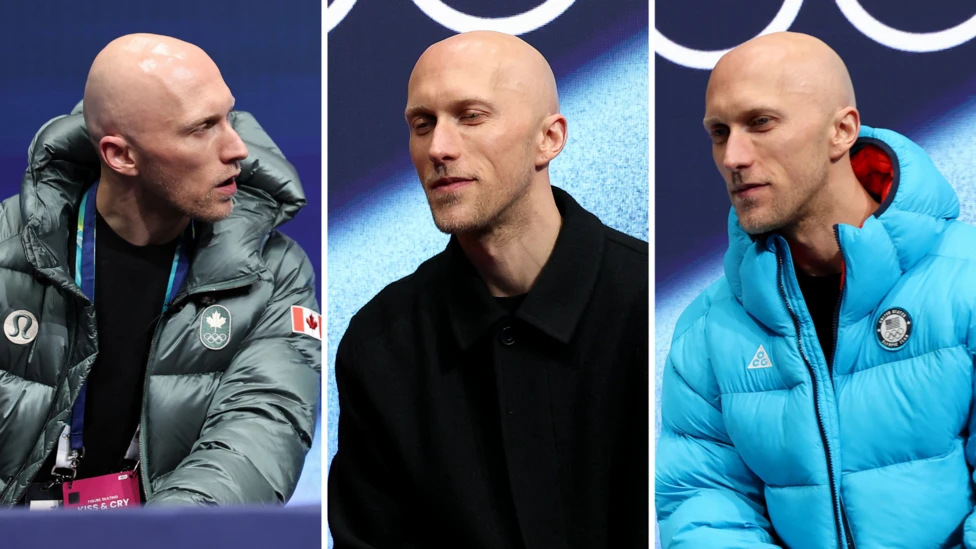
Benoit Richaud was pictured in Canada, Spain and United States team jackets across the men's short programme
Get in touch
Send us your questions
Why is Richaud such a popular coach?
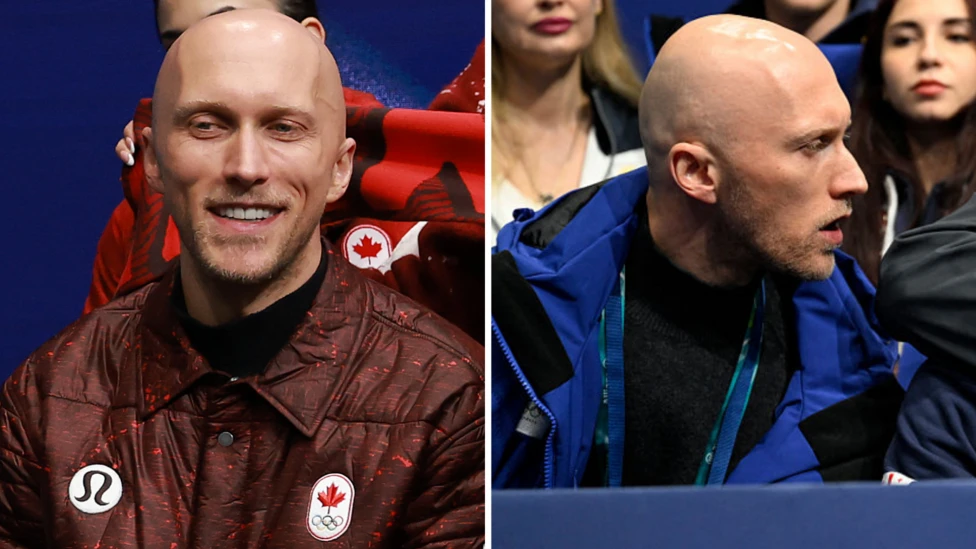
Just 14 minutes separated Benoit Richaud being pictured in outfits supporting Canada and Georgia on Sunday evening
Richaud's popularity as a coach is no surprise when you look at his track record to date.
As a skater, he won the Junior French Championships while skating in partnership with Elodie Brouiller in 2005-06.
Three years later, Richaud also finished third at senior level at this competition in partnership with Canada's Terry Findlay.
But it is as a coach and choreographer where Richaud has found more success.
At the 2024 ISU Skating Awards, he was named Best Figure Skater Choreographer, an award he was also shortlisted for in 2025.
Of the five skaters in Sunday's men's final, two being coached by Richaud is a testament to how he is rated in the sport.
Why is Richaud coaching athletes from different nations?
While all athletes are representing their own countries, in figure skating they tend to be coached individually rather than per nation.
Richaud is a prime example of this, with his 16 athletes coming from 13 different countries.
Rules allow coaches to work with athletes from multiple different nations, even if they are competing against each other.
This article is the latest from BBC Sport's Ask Me Anything team.
