 | 13 November 2014 |

| |
| BBC Homepage | | |
| |||
| Contact Us | | |
Local HistoryYou are in: South Yorkshire > History > Local History > Philip Hensher's Sheffield 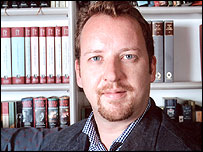 Philip Hensher Philip Hensher's SheffieldPhilip Hensher's book The Northern Clemency was shortlisted for the 2008 Booker Prize. It's all about growing up in Sheffield from the mid-1970s through to the early 1990s. He tells us about the book - and about his own childhood in Sheffield. Philip Hensher spent most of his young life in Sheffield and was a pupil at Tapton School. He played the double bass in the City of Sheffield Youth Orchestra and grew up in the western suburbs of Sheffield. As well as a novelist, Philip Hensher has been a columnist, book reviewer and literary editor, worked as a clerk in the House of Commons, teaches creative writing at the University of Exeter and has judged on the Booker Prize panel as well as being a nominee himself. The Northern Clemency is a semi-autobiographical novel set in a quiet suburb on the west of Sheffield between 1974 and 1994, and it charts the lives of two ordinary lower middle-class families. Help playing audio/video  The Northern Clemency by Philip Hensher Philip came into BBC Radio Sheffield to talk with Gareth Evans about the book and about social history. Listen to the full interview via the link below. The Tories are about to come back into power when the book begins in the mid 1970s. It takes us through the years of Thatcher and the miners strike and into the mid-1990s just before Labour got into power, but in no way is it an overtly political book. Philip Hensher wrote about this period because it's when he grew up: "It was my childhood. I started writing in about 1974 when I was nine years old. It was a time which was very, very different to the way it is now. Sheffield was completely different - people thought and behaved in different ways. "I wrote quite a lot of the book and then I thought, 'I want to find out what happens to these people when they grow older.' "What pushed it into this epic length was a character, a little boy, who's obsessively interested in snakes. I thought, 'I wonder what would happen to a small boy like that when he grows up... I know exactly what would happen to a boy like that 10 years later; he would have become a far left activist.' 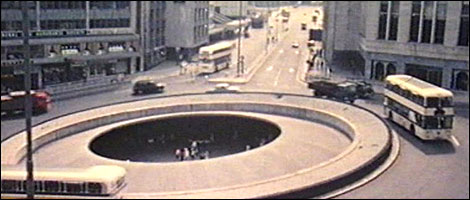 1970s Sheffield: the Hole in the Road "That was what really set it off, and what brought it up to the miner's strike - and then there was no stopping it!" Hensher on historyThe characters don't change their personalities much through the book and Gareth Evans recalls his own family during this period; "When I read the book, I think of my mum and dad through that period and they didn't change. A lot of stuff was going on around them with the political landscape, but they remained pretty much stoic and unchanged." And it's the minutiae of life and society that Philip says he wanted to examine in the book. "One of the things that annoys me about books about large historical subjects is that every now and then someone will sit down and have a large scale conversation about the state of politics today and where history is going... 'Have you noticed, Brenda, that the Berlin Wall has just come down and what do we think about that?' "I think history really impacts on people and changes their lives - but in small, incremental ways.  No more net curtains "You suddenly notice that the people next door have taken to going for their winter holiday to Thailand for instance. "Or one thing I noticed was, about 10 years ago the road I used to walk down to get to my parents house, every single house used to have net curtains in the window. Then 10 years ago I looked and not a single one had net curtains in the window. Was there some sort of agreement that I missed out on that we were all going to take down our net curtains? "Another thing which I couldn't find a way to put in the book was, what did you say when you answered the phone 20 or 30 years ago? You said your telephone number. What do you say now? 'Hello.' But when did people stop saying their number? It's very odd. "It's those kind of incremental changes of behaviour which reflect, I reckon, some kind of larger change in society - the passage of time. It's very difficult to draw direct connections between the change of government, the credit crunch, whatever, and the fact that people stop saying their number when they answer the phone. 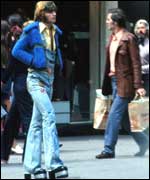 Man in flares on the Kings Road "But those small changes in manners are much, much more human and powerful reflections of the changes of time than people suddenly entering the room in a book and saying, 'Oh I hear that John Major has resigned'." Nostalgia and memoryPhilip Hensher has clear and definite ideas about the difference between nostalgia and memory, as he explains: "As you get older books, films, television programmes, dramas all start to be made about eras that you remember yourself. I started saying, '1975 wasn't like that at all. It didn't look like that, people didn't talk like that or think like that'. "What has taken over these eras is nostalgia which is very different from memory. "Nostalgia seems to focus on a pop record or fashion, interior design and so on, but it leaves out the fact that most people weren't at the cutting edge of fashion, listening obsessively to that year's pop record, they weren't all wearing platforms in 1975... "The sort of thing that series like Life on Mars always leave out in their accounts of the past are odd little details - such as the fact that no woman over the age of 60 ever left the house without putting a hat on in the 1970s. "And the interiors of houses were made up of furniture which hadn't been changed since the 1950s. The "unit" for example! "All that has been swept away in these programmes in a wave of choppers and space hoppers. I really wanted to summon the real texture of life in these periods and you've got to clear your mind of 100 television programmes called I Love 1974 and just meditate on your past. 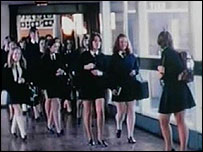 Schoolgirls at Myers Grove School, 1970s "I had a meditative half an hour each morning before starting work on this book. Sometimes it was quite therapeutic, sometimes it was quite surprising how fresh the hurt or embarrassment or even anger still was from a small childhood school episode. "It brought back all sorts of episodes of minor playground humiliation or even humiliation inflicted by teachers. I thought they'd been written off and I'd forgotten all about them, but I found myself breaking out in a cold sweat remembering things a teacher had said to me that I still thought was fairly unforgivable! So it was quite traumatic as well." School daysGareth Evans asks Philip about school days at Tapton School, and one of the things he remembers is Sir Seb Coe... "When I was a boy at Tapton they always used to bring up Sebastian Coe and this was before anyone had ever heard of him. We used to laugh about it all the time and then suddenly he went and won a gold medal at the Moscow Olympics and it was all rather embarrassing. "It was very, 'If you work hard you could grow up to be Sebastian Coe' and clearly that was not going to be the case because I was never going to run the 800m in any kind of time at all!" 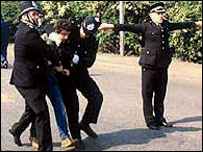 The miner's strikeA large part of the book is concerned with the miner's strike; protests outside Sheffield Central Library and food collections for miners' families on Fargate. This is one major historical moment which Philip Hensher says did affect everybody. "There was a lot of door-slamming and arguments over the dinner table even in the prosperous half of Sheffield where I grew up. Everybody had a view on it, everybody talked about it all the time. "The appearance of people making food collections for miners' families in Fargate was a deeply traumatic moment for most people - we didn't really expect to see that in Sheffield, ever. "I remember odd little episodes around that time. I used to go swimming at the University swimming pool every day, and in the middle of the summer holiday, about 500 policemen in their swimming trunks leapt into the pool - they'd been imported from all over and were staying in a University Hall of Residence. The whole texture of life seemed disrupted. One of the images Philip Hensher creates in the book is of Arthur Scargill dressed 'like your dad at the weekend.' "I had a serious conversation in about 1984 about whether Arthur Scargill or Mrs Thatcher got through more Elnett hairspray. It was an era of elaborate hair-do's. His hair never moved. If it had, I suppose it would have come off in one great slab like a cellar door." 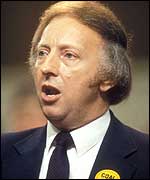 Arthur Scargill Philip wanted to capture the strangeness and disruption of the period during the miner's strike: "I don't know if there are any conclusions to be reached about the miner's strike... history led it in one particular direction, I don't think anybody won in the end. "But I wanted to render the dreamlike strangeness of that period in the book. I didn't want to do it through a striking miner as I felt that that material has been done a lot by people who know a lot more about it than I do, so I did it from my experience of knowing children of University and intellectual families who turned to mad far-left politics in little Leninist groups. Help playing audio/video "They were very odd people and I knew a lot of them. Oddly they are the characters in the book that the people who write for The Guardian have said is 'grossly caricatured.' They don't know the half of it - those are the people that I know best!" How autobiographical is the book?"There's a withdrawn, bookish character who is in some way what I could have been but then there's another character who's a complete party animal and a bit of me is like that too. There are bits of me in all the characters, even the old ladies. "Some of the school bits especially are quite autobiographical because I found it hard to imagine somebody else's experiences at school. Being worried more than anything because you've forgotten your football socks." On being Booker nominated"The whole shortlist experience was very nice, if slightly mad. All sorts of incredibly grand people suddenly knew my name. James Naughtie from the Today programme crossed a room to shake my hand and said, 'Hello Philip' which was deeply odd. "Anyway that's all come to an end now. I'm sure if I saw James Naughtie in the street he'd walk straight past me again." Help playing audio/video last updated: 30/10/2008 at 14:58 SEE ALSOYou are in: South Yorkshire > History > Local History > Philip Hensher's Sheffield    More information about the Miners' Strike in South Yorkshire |
| | About the BBC | Help | Terms of Use | Privacy & Cookies Policy |
