 | 13 November 2014 |

| |
| BBC Homepage | | |
| |||
| Contact Us | | |
Places featuresYou are in: Somerset > Places > Places features > 'Homely and welcoming' 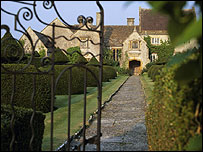 The Lytes family were of Norman descent 'Homely and welcoming'Regarded as one of Somerset's best kept secrets, Lytes Cary Manor is a unique example of how a medieval house developed through the centuries. The house also has an intimate feel thanks to its restoration by the Jenner family from 1907. Lytes Cary Manor near Charlton Mackrell was owned by the Lytes family from the 14th to the 17th Century and takes its name from the family and the River Cary nearby. The house consists of different architectural styles dating from the medieval age to the 20th century although the chapel on the grounds was completed in 1348. The Lytes family were also known for their interest in botany and their fascination with their ancestry, all of which is evident in the house. Great HallWalking into Lytes Cary Manor, the most striking room is the Great Hall where the family and the whole household would have eaten together. The Great Hall still has its original raised dais where the family, the priest and important guests would have sat. James Shanahan, a room steward volunteer, said: "It would have been the most comfortable part of the room because it was furthest away from the kitchen and the doors, avoiding any cold drafts and cooking smells." Adjoining this is the Oriel room which was added so the family could have more privacy away from their servants. It's an early example of the modern dining room and originally would have been closed off by a wooden screen. Great ChamberThe stone staircase leads visitors up to the another grand room in the house, the Great Chamber. 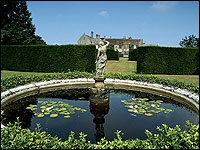 The gardens are 'Arts and Crafts' style In 2007 work was carried out to save the plasterboard ceiling which had shown signs of cracking in recent years. This was blamed on the warmer and wetter summers. The National Trust brought in a team of experts to install a network of wires in the roof structure to suspend the ceiling to mirror the movements of the surrounding walls in an attempt to prevent further damage. The Great Chamber was built in the 1530's when John Lytes represented Henry VIII's government in Somerset. He was keen to show his loyalty to the King - above the bed is a royal coat of arms. This room was reserved for his most honoured guests and is richly decorated with tapestries and panelling. 'Honest furniture'For many people who visit the house the cosiest place is the Great Parlour room on the ground floor which looks out onto the gardens.
The Lytes added this room in the 17th century, and it was restored by the Jenners who bought the property in 1907. Like the rest of the house, this was in a dilapidated state - in this case it was used by the previous tenants as a store for farm implements. Sir Walter Jenner and his wife Flora furnished this sitting room with their own pieces which are mainly 17th and 18th century. "None of the furniture is the best example of that particular style, but its all honest furniture. "It's furniture that has been used, it's furniture that people have lived with, it's furniture that people have cared for and loved and that actually comes across in the feel of the place," James said. There are further examples of where the Jenners made their mark. They were very much influenced by the Arts and Crafts movement, and this can be seen in the gardens which consisted of different 'rooms' which all vary in size, mood and colour. The Arts and Crafts movement (c1860 - 1910) was made up of English designers and writers, led by William Morris who wanted a return to well-made, handcrafted goods instead of mass-produced, poor quality machine-made items. Intimate and informalAlthough Lytes Cary Manor is less grand than nearby Barrington Court or Montacute House, it is unique because despite its age, it is unspoilt. The Lytes family fortunes declined in the 18th century and in the 1750s they were forced to leave. It was later bought by a slave trader who rented it to a tenanted farmer. Even though it was neglected during this Victorian era it was a blessing because the house escaped any sort of modernisation. "Very little had changed. It's a time capsule from the 1940s and it's also a time capsule of how a house would have developed from the medieval times," said James. The house is also unique because it came fully furnished, unlike many National Trust properties where furniture and portraits are loaned in. It's this quality which makes the house intimate and informal, which is why the house is held in great affection by the people who work there. "I feel I own it. That's an odd thing to say, but that's probably the nicest thing you can say about the house, that you can actually feel a link with the people who lived there and the people who built it. "You can actually look around and imagine you are living there." last updated: 29/09/2008 at 14:15 SEE ALSOYou are in: Somerset > Places > Places features > 'Homely and welcoming'   |
| | About the BBC | Help | Terms of Use | Privacy & Cookies Policy |
