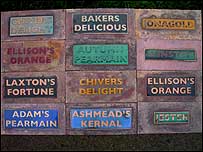
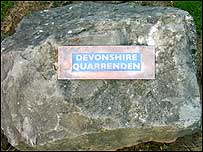
The signs, which will decorate part of the national cycle network in Somerset, were designed and created by enamelling experts Elizabeth Turrell, Imi Maufe and Ed Silverton from the University of the West of England. UWE is working with Bristol-based cycling charity Sustrans to create a 'linear orchard' to enhance the national network of cycle paths, much of which runs along old railway tracks. Part of the wider 'art and the travelling landscape' project organised by Sustrans, the signs depict names of ancient apple varieties. 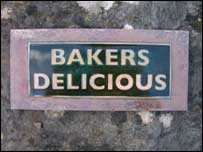 | | Bakers Delicious is one of the varities |
Etched and enamelled onto weathered copper plate, the signs will be embedded into granite boulders to mark out trails. The orchard idea stems from a time when littering train travellers used to throw their apple cores out of the window, resulting in a plethora of unusual orchards seeding along railway embankments. Unusual varieties of apple have been immortalised in the series of enamelled signs and include apples rarely heard of now such as Ellison's Orange, Autumn Pearman, Michelmas Red and Chivers Delight. It is also apt that the signs are used to decorate a section of the path running through Somerset - which, of course, is famous for cider apples. "The signs resemble the enamelled signage found in railway waiting rooms and stations," Elizabeth Turrell said. "The signs are etched onto copper plate and enamelled using a process that gives a weathered appearance to the edges of the signs creating a textural contrast to the boulders. "It was important that we created robust signs capable of withstanding extreme weather conditions and potential vandalism." UWE artists have also been working with school children to design bike templates that have been embedded into the path - an interesting take on the standard signs used to mark out bike lanes on main roads. The Sustrans designs have then been cut out using thermoplastic material and embedded into the ground. Katy Hallet, Sustrans' director of art and the travelling landscape, said: "We are delighted with this project. "The linear orchard and succession of signs provides continual interest along the route and are perfectly in keeping with our aims to create landmarks, celebrate local characteristics, bring local communities together and make for enjoyable, memorable journeys." |