 | | | | | | | ||||||||||||||||||||||||||||||||||||||||||||||||||||||||||||||||||||||||||||||||
| | |||||||||||||||||||||||||||||||||||||||||||||||||||||||||||||||||||||||||||||||||||||
|
Military conference to share methods of war | |||||||||||||||||||||||||||||||||||||||||||||||||||||||||||||||||||||||||||||||||||||
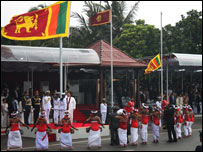
In a concerted public relations campaign, the government and military of Sri Lanka have opened a three-day international conference on how they won the war against the Tamil Tiger rebels three years ago.
They have brushed aside intense international criticism which alleges that their victory inflicted far too many civilian deaths. Indeed, they say their war victory should be a model for other countries. Most Western countries have stayed away from the conference – but more than 40 others are attending. Most coveted fighting force A film screened at the conference depicted how the Sri Lanka army, together with the air force, navy, civil defence force and police had effectively tackled the supposedly invincible LTTE, becoming the world’s most coveted fighting force. As the film shows, Sri Lanka aims to tackle, head-on, the waves of criticism it’s received for the manner of its war victory; and to place the military on a pedestal. Making the keynote address, the defence secretary, Gotabhaya Rajapaksa, repeated and stated government assertion. Civilian casualties “One of the most important facets of the Sri Lankan war against terrorism was the immense care with which it was conducted. Ensuring zero civilian casualties was an overriding priority”. Top officials thereby inverted the widespread allegation that government shelling may have killed thousands of civilians. But other views were expressed. David Kilcullen, an Australian counter-insurgency expert, said he believed Sri Lanka had morally justifiable arguments on its side. Yet he said it was controversial and unusual that the Tamil Tiger leaders were not given a chance to surrender. Accountability He said that Sri Lanka should look into allegations of serious rights abuses. “Violence against civilians breeds resentment and hatred towards the government. And this tends to be exacerbated in the long run unless there’s a public process of accountability and reconciliation”. Most Western countries are staying away from this conference but more than 40 have sent delegations, including Russia, China, India, Pakistan and Brazil. | ||||||||||||||||||||||||||||||||||||||||||||||||||||||||||||||||||||||||||||||||||||||
| ||||||||||||||||||||||||||||||||||||||||||||||||||||||||||||||||||||||||||||||||||||||
| ||||||||||||||||||||||||||||||||||||||||||||||||||||||||||||||||||||||||||||||||||||||









 India's frustration with Sri Lanka over Tamils