 | | | | | | | ||||||||||||||||||||||||||||||||||||||||||||||||||||||||||||||||||||||||||||||||
| | |||||||||||||||||||||||||||||||||||||||||||||||||||||||||||||||||||||||||||||||||||||
|
Civilians were trapped in war - GA | |||||||||||||||||||||||||||||||||||||||||||||||||||||||||||||||||||||||||||||||||||||
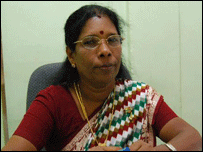
A woman who served as the main Sri Lankan government official in its last war zone has spoken of the sense of despair there as fighting raged in early 2009. Emelda Sukumar, who was Government Agent (GA) in Mullaitivu district, was addressing the government-appointed commission looking into the long-running war. She told the Lessons Learnt and Reconciliation Commission (LLRC) last week that Tamil Tiger (LTTE) fighters deliberately mixed with civilians to use the latter as human shields. As the Sri Lankan military advanced towards the final frontline around Putumattalan, the LTTE moved with ordinary people into the government-declared safe zones. There was therefore combat in these areas and they were anything but safe, she said in English. Shelling from both sides “Whoever tried to escape, they [LTTE] started to fire,” she told the commission chairman. “There’s no way to escape, sir.”
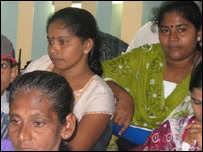
Mrs Sukumar, currently the GA for Jaffna, said everybody was caught between the government and the LTTE. She believed both sides shelled and the LTTE fired. One afternoon the fighting started and she found herself in the middle. “Around 13 people were injured including me, sir. I got immediately hypertension. “I couldn’t move to the bunkers, that shelling started ... shelling came to my surrounding places.” As the two sides fought, ordinary people were waiting and hoping to move to the non-combat areas. Officials killed Every day people were crying and shouting in despair at not being able to get out, she said.
Mrs Sukumar was evacuated on 22nd January that year during a government-declared ceasefire. But she recited a list of some of her fellow officials who stayed longer and were killed or injured. She said two or three women officers and clerks, a man and a child of one of them all died in shelling while at least two development officials died in LTTE firing. Numerous other officials died although she was not sure how. Her own assistant director of planning lost her leg and was continuing to work despite being an amputee. Medical expertise in the war zone was provided by some six government doctors plus nurses and health volunteers, she said. Even after moving to the safety of Vavuniya, Emelda Sukumar continued to coordinate government programmes of essential services for Mullaitivu. She said she believed that at one point, the small combat zone contained 360,000 people – both civilians and LTTE – the Tigers having taken displaced civilians with them as they retreated from the government advance. From time to time some of these were evacuated or managed to escape, she said. The UN said some 280,000 Tamil civilians were in army-run camps after the war ended in May. Despite the panel pressing her to give estimated casualty figures, she declined to do so. She said she was only able to make tallies by talking to resettling refugees about what family members they had lost. This process was still a nascent one in Mullaitivu when she moved to Jaffna in July this year. | ||||||||||||||||||||||||||||||||||||||||||||||||||||||||||||||||||||||||||||||||||||||
| ||||||||||||||||||||||||||||||||||||||||||||||||||||||||||||||||||||||||||||||||||||||
| ||||||||||||||||||||||||||||||||||||||||||||||||||||||||||||||||||||||||||||||||||||||









 Around 13 people were injured including me, sir. I got immediately hypertension. I couldn’t move to the bunkers... shelling came to my surrounding places
 India's frustration with Sri Lanka over Tamils