| | | | | | | ||||||||||||||||||||||||||||||||||||||||||||||||||||||||||||||||||||||||||||||||
| | |||||||||||||||||||||||||||||||||||||||||||||||||||||||||||||||||||||||||||||||||||||
|
'6000 soldiers killed' in war | |||||||||||||||||||||||||||||||||||||||||||||||||||||||||||||||||||||||||||||||||||||
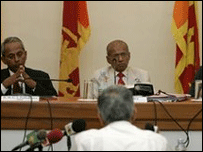
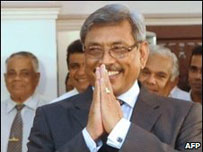
The man who oversaw Sri Lanka's defeat of the Tamil Tiger or LTTE rebels last year has said he believes more than 6,000 of the guerrillas were killed in the final stage of the fighting. Gotabhaya Rajapaksa said that international critics of the Sri Lankan government tend to confuse rebel deaths with civilian ones. The controversial and powerful defence secretary and brother to the president was testifying before a commission set up to examine the war's final years. Gotabhaya Rajapaksa, widely seen as the mastermind of the war victory, gave a robust response to allegations that have dogged the Sri Lankan government and military over the conduct of the campaign – for instance, a report by the thinktank, the International Crisis Group, alleging that their actions killed tens of thousands of civilians. Rebel resurgence Mr Rajapaksa rejected this, saying that in fact the army suffered 6,000 deaths and 30,000 injuries in the war's final stages and, he believed, the LTTE sustained as many casualties.
"If the army suffered that much of casualties because of the fighting, at least the same amount of casualties you can expect from the LTTE as well," he said. "I am sure it is much more because the firepower of the government forces is much more." The critics, he said, were confusing rebel deaths with civilian ones, which the military had sought to minimise. Speaking calmly, and repeatedly passing the commissioners dossiers of information, Gotabhaya Rajapaksa said it was the Tigers who had killed innocent people by shooting at them as they tried to flee. 1983 racial riots He also denied recent reports that permanent housing for army personnel and their families was being built in northern Sri Lanka – something which Tamil MPs claim is being done to change the area’s ethnic make-up.
He said the military would continue, in his words, to “dominate the jungles” there and prevent a rebel resurgence. But at the very end of his submission to the panel, Mr. Rajapaksa indicated that he and the government are still highly suspicious of people in the north who, they allege, may still harbour sympathy for the LTTE. "And they are still – the worst category is that, who may be still having the same LTTE ideologies and have been brainwashed for so many years," Gotabhaya Rajapaksa told the panel. Government servants 'brainwashed' "It can include some of the government servants. So this is another danger that we have seen – people who have not surrendered or [been] identified."
Before it heard from the defence secretary, the Commission heard from Mangala Moonesinghe, the former Sri Lankan high commissioner to both Britain and India. He said he believed “terrorism” in Sri Lankan had not arisen in a vacuum and had been a response to pogroms and killings carried out against Tamil people by organised mobs, sometimes backed by politicians. "These people did no harm. Their houses were destroyed, their children were killed, their husbands were killed. So – who started terrorism? It was we," Mr. Moonesinghe said. "And then – gradually naturally the youth went into terrorism, Tamil youth in the north, and in order to suppress that it was harshly brought down. Until the 1983 riots took place, when it took another form," he added. | LOCAL LINKS  Military presence "irks people" Military presence "irks people"16 August, 2010 | Sandeshaya Fonseka charged with conspiracy16 August, 2010 | Sandeshaya Tamils complain to Sri Lanka panelSandeshaya Sri Lanka 'conflict threat remains'Sandeshaya War inquiry commission opensSandeshaya 'Not enough funds' for Api Venuwen Api11 July, 2010 | Sandeshaya KP 'brokers' govt-diaspora link28 June, 2010 | Sandeshaya A call to investigate war crimes 17 May, 2010 | Sandeshaya | |||||||||||||||||||||||||||||||||||||||||||||||||||||||||||||||||||||||||||||||||||||
| ||||||||||||||||||||||||||||||||||||||||||||||||||||||||||||||||||||||||||||||||||||||
| ||||||||||||||||||||||||||||||||||||||||||||||||||||||||||||||||||||||||||||||||||||||









 These people did no harm. Their houses were destroyed, their children were killed, their husbands were killed. So – who started terrorism? It was we