 | | | | | | | ||||||||||||||||||||||||||||||||||||||||||||||||||||||||||||||||||||||||||||||||
| | |||||||||||||||||||||||||||||||||||||||||||||||||||||||||||||||||||||||||||||||||||||
|
Sri Lanka "ready for GSP+ challenge" | |||||||||||||||||||||||||||||||||||||||||||||||||||||||||||||||||||||||||||||||||||||
The Sri Lankan government says it is prepared to face challenges posed by the withdrawal of trade concessions by the European Union.
In a statement issued on Thursday the Central Bank of Sri Lanka (CBSL) said that the government and the bank as well as many Sri Lankan exporters to the EU "have already taken many measures to deal with this risk". CBSL says "prevailing crisis in some of the economies in the EU region has added to the difficulty of continuation of such concessions by the EU". Steps taken Therefore, CBSL states that steps already been taken to deal with the risk include ending the conflict and achieving political stability. It said that apparel exports to EU countries constituted about 50 per cent of total apparel exports in 2009 and about 60 per cent benefited from the concessions.
The European Union has warned that Sri Lanka will lose preferential trade status, known as GSP plus, unless the country commits to improving its human rights record within six months. In a letter sent by EU foreign policy chief Catherine Ashton and Trade Commissioner Karel De Gucht on the 17th of June, the commission has requested a written commitment from the Sri Lankan government by July 1, "containing a firm undertaking to address by the end of the year, the principle outstanding issues". Politically motivated Presidet Mahinda Rajapaksa has accused the EU decision on GSP+ as politically motivated. In an interview with the Times of India President Rajapaksa has said, "when I called the elections, they immediately called for suspension of tariff concessions. It was a politically motivated decision. If the EU doesn't want to give it, let them keep it. I don't want it". EU rejected the accusations as entirely false. Trade Spokesman for EU John Clancy on Wednesday said, "the government of Sri Lanka is very well aware that this is a legal process that began several years ago and to suggest otherwise is simply misleading". Sri Lanka is a major beneficiary of the trading opportunities offered by GSP+. In 2008, EU imports from Sri Lanka under GSP+ totalled EUR 1.24 billion. | EXTERNAL LINKS The BBC is not responsible for the content of external internet sites | |||||||||||||||||||||||||||||||||||||||||||||||||||||||||||||||||||||||||||||||||||||
| ||||||||||||||||||||||||||||||||||||||||||||||||||||||||||||||||||||||||||||||||||||||
| ||||||||||||||||||||||||||||||||||||||||||||||||||||||||||||||||||||||||||||||||||||||









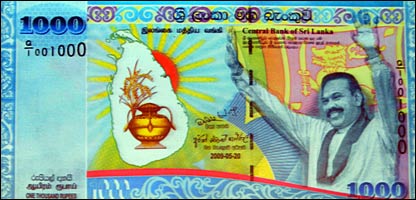
 Central bank of Sri Lanka