 | | | | | | | ||||||||||||||||||||||||||||||||||||||||||||||||||||||||||||||||||||||||||||||||
| | |||||||||||||||||||||||||||||||||||||||||||||||||||||||||||||||||||||||||||||||||||||
|
Child soldiers released | |||||||||||||||||||||||||||||||||||||||||||||||||||||||||||||||||||||||||||||||||||||
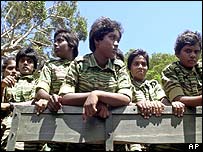
The Sri Lankan authorities say that all the former Tamil Tiger rebel recruits who were under-age when the war ended last year, have now returned to their families and communities. A United Nations agency has confirmed the closure of both the facilities housing children who were earlier involved with the separatists. Since the war ended, the government has been holding around 10,000 former Tamil Tiger members or fighters who were captured, surrendered or screened off from ordinary civilians. The circumstances are controversial because they've been housed at irregular facilities without charge. Five hundred and sixty-six were 17 years old or less when detained. Vocational training The government says it has given them a complete course of educational or vocational training which will help them catch up with their fellow citizens. The military official in charge of rehabilitation told the BBC he was "very happy" with their progress and that the schooling facility for them in Colombo has now been closed down, weeks after the vocational centre housing the other children also shut down. UNICEF Support The UN Children's Fund, UNICEF, has supported the programme and a UNICEF official said they will help the young people find work or further studies; about 50 will now join the mainstream school in which their facility was housed. The last children to be released were taken to the northern town of Vavuniya to rejoin their families, some of whom are now resettled but some of whom remain in camps in the north. Adult detainees said to be linked to the Tigers have started being released in batches, but thousands remain in camps and the authorities say they will put a few hundred of them on trial. Separately, a Sri Lankan government minister told the BBC that legislation is being prepared to issue death certificates for every Sri Lankan killed in the war. He said this would include civilians, soldiers and rebels, although he didn't know how many certificates were yet to be issued. Relatives will need to give details of death circumstances and it's not yet clear what will be done for the many who simply went missing. The United Nations estimates that the war killed some 100,000 people. | ||||||||||||||||||||||||||||||||||||||||||||||||||||||||||||||||||||||||||||||||||||||
| ||||||||||||||||||||||||||||||||||||||||||||||||||||||||||||||||||||||||||||||||||||||
| ||||||||||||||||||||||||||||||||||||||||||||||||||||||||||||||||||||||||||||||||||||||









 India's frustration with Sri Lanka over Tamils