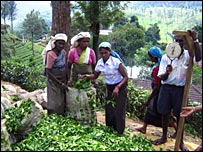
Trade unions in Sri Lanka say a quarter of a million tea plantation workers have joined a non-cooperation exercise to lobby for higher wages. Employers say they’re concerned that production and exports will be affected. After China, India and Kenya, Sri Lanka is the world’s fourth-biggest tea producer. But a marked slowdown has now gripped all of its largest tea estates, most of which lie in the hills. This isn’t a strike. But three large trade unions have announced what they call a non-cooperation exercise. Workers are still picking the tea – but they’re preventing it from leaving the plantations. It’s all in aid of higher pay – they want almost to double the minimum daily wage, to about four dollars fifty. Ramiah Yogarajan , national organiser for the Ceylon Workers’ Congress speaking to BBC reporter Charles Haviland said that plantation workers are the people with the largest number in poverty. “Since 1992 the plantation companies were privatised and from 1992 to 2002 poverty in the plantations increased from 22% to 32%. So there is a serious issue in the income of the workers. 23” said Yogarajan. Meanwhile the main tea traders’ association has warned that both production and exports will be affected. And the Employers’ Federation of Ceylon has been writing to the unions, complaining at what it says are heavy-handed practices in imposing the non-cooperation. The trade unions say they’re pleased that business owners are sitting up and taking notice. The three unions leading the action say other unions are joining in. Drought has severely affected recent tea crops and livelihoods here – and poverty-stricken workers are in the mood to take a stand. | 










 India's frustration with Sri Lanka over Tamils