 | | | | | | | ||||||||||||||||||||||||||||||||||||||||||||||||||||||||||||||||||||||||||||||||
| | |||||||||||||||||||||||||||||||||||||||||||||||||||||||||||||||||||||||||||||||||||||
|
Lanka rejects UN appeal | |||||||||||||||||||||||||||||||||||||||||||||||||||||||||||||||||||||||||||||||||||||
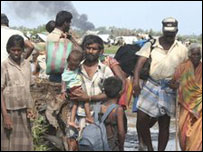
Sri Lanka has rejected an appeal by the United Nations to allow more aid agencies in to the zone of fighting in its north to give immediate help to the affected people. Sri Lanka's defence secretary, Gotabhaya Rajapakse, told the BBC it would not be sensible to let aid agencies into the conflict zone because, he said, there was already an army operation in progress to "rescue" civilians. But the foreign secretary Palitha Kohona, also speaking to the BBC, said the government would "certainly appreciate" international assistance for the one-hundred-thousand or so people who've already fled the conflict zone this week. They are now in camps and Dr Kohona said there was particular need for tents, water, water tanks and purifiers, and sanitation equipment. He said the number fleeing today, Thursday, had dropped to fewer than six-hundred, adding that the Tamil Tigers might be preventing others from leaving their newly restricted area.
The guerrillas deny holding civilians as human shields in this way. A government official inside the rebel-held zone said fighting between the army and rebels was continuing but at a lower level than before. The only international agency allowed to operate near the conflict zone, the International Committee of the Red Cross(ICRC), says it evacuated three-hundred-and-fifty sick and wounded people and their families by ocean-going ship on Wednesday, and was doing the same today. Sarasi Wijeratna of the ICRC said that they are continuously evacuating the wounded out of the conflict zone to make shift health facilities. “The civilians within the conflict zone are facing a shortage of medical supplies and food and the health officials are working under risky conditions” said Wijeratna. | ||||||||||||||||||||||||||||||||||||||||||||||||||||||||||||||||||||||||||||||||||||||
| ||||||||||||||||||||||||||||||||||||||||||||||||||||||||||||||||||||||||||||||||||||||
| ||||||||||||||||||||||||||||||||||||||||||||||||||||||||||||||||||||||||||||||||||||||









 India's frustration with Sri Lanka over Tamils