 | | | | | | | ||||||||||||||||||||||||||||||||||||||||||||||||||||||||||||||||||||||||||||||||
| | |||||||||||||||||||||||||||||||||||||||||||||||||||||||||||||||||||||||||||||||||||||
|
'Rising threats' to Sri Lanka media | |||||||||||||||||||||||||||||||||||||||||||||||||||||||||||||||||||||||||||||||||||||
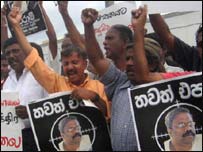
Rights group Amnesty International says threats to journalists have increased dramatically in Sri Lanka. The human rights group says threats to freedom of expression have gone up as the country slides back into civil war. It says that in the last two years at least 10 media workers have been killed. Others have been abducted, detained, or have disappeared. Most of those targeted have been Tamil journalists working in conflict areas in the north and east of the country. In the south, Sinhalese journalists have faced intimidation - especially those reporting on corruption, Amnesty says. The group says Tamil journalists working in the conflict areas in the north and east are under severe threat from the security forces and armed Tamil groups who appear to be acting with their consent. "The Karuna faction, a splinter group of the LTTE reportedly acting with the consent of the government forces, is also reported to have harassed media and stopped the distribution of Sudar Oli and Thinnakkural in Batticaloa, Trincomalee and Ampara Districts (in the east) since at least January 2007", the report states. It says the Tamil Tigers have completely stifled dissent in areas they control.
The report also shows that the LTTE does not allow any independent local media in the territories it controls, and closely monitors and restricts the work of journalists. On occasions, the LTTE has also targeted journalists in other parts of the country. Impunity Amnesty International says there is a climate of impunity where those responsible are not punished. Amnesty has called on Sri Lanka's government to respect its obligations under international law, and on both the government and the rebels to end attacks on journalists. Amnesty appeal Amnesty International calls on Sri Lanka authorities and the LTTE to: • Respect and protect the rights to life, liberty and security of media workers in compliance with Sri Lanka’s obligations under international law • Declare unequivocally that killings, threats, or other attacks on media workers will not be tolerated • Ensure that all cases of attacks on media workers, irrespective of the identity of perpetrators or victims, are promptly, independently, impartially and effectively investigated. • Respect and ensure respect for the right to freedom of opinion and expression, in compliance with Sri Lanka’s obligations under the ICCPR and other international treaties and standards. | ||||||||||||||||||||||||||||||||||||||||||||||||||||||||||||||||||||||||||||||||||||||
| ||||||||||||||||||||||||||||||||||||||||||||||||||||||||||||||||||||||||||||||||||||||
| ||||||||||||||||||||||||||||||||||||||||||||||||||||||||||||||||||||||||||||||||||||||









 India's frustration with Sri Lanka over Tamils