| | | | | | | ||||||||||||||||||||||||||||||||||||||||||||||||||||||||||||||||||||||||||||||||
| | |||||||||||||||||||||||||||||||||||||||||||||||||||||||||||||||||||||||||||||||||||||
|
India to start Sethusamudram | |||||||||||||||||||||||||||||||||||||||||||||||||||||||||||||||||||||||||||||||||||||
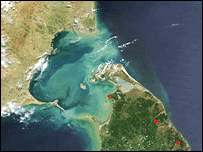
The Indian Prime Minister Manmohan Singh is to inaugurate a mega deep sea dredging project in Indian Ocean's straits between India and Sri Lanka on 2nd July. Named Sethusamudhram Shipping Channel Project (SSCP), the proposed channel will provide continuous navigable route within Indian sea waters for the first time. Considered as a crucial project for Indian maritime trade and defence needs, it is also widely criticised by environmentalists in India and Sri Lanka for its possible damage to the marine ecosystem in ecologically sensitive Palk Straits and the Gulf of Mannar.
Indian officials have finalised a Memorandum of Understanding (MOU) with the Suez Canal Authority to facilitate knowledge-sharing between the Indian and Suez authorities on construction, operation and maintenance of the Sethu channel, Indian Shipping Minister T R Balu said. A 540 million US dollar project envisages dredging of the sand stone relief on two stretches along the 167-kilometre long channel between India and Sri Lanka. Tamil Nadu support The new channel will have a depth of 12 metres and a width of 300 metres for a two-way traffic. It would cut the running time (about 36 hours) and distance (nearly 400 nautical miles) for Indian and international fleets apart from saving fuel and fleet labour. Supporters of the project, mainly from the southern Indian state of Tamil Nadu claim it will boost maritime trade along the south Indian coastline, increase the revenue of various ports and help the coastal economy to bloom. They say the Tuticorin Port, located in southern tip of India, could become a leading container and transhipment port, as it is located centrally on the international trade route connecting with Europe and the Middle East on one side and the Asia Pacific region on the other. Defence experts say the channel provides the crucial base for India to become the Indian Ocean's predominant naval power and help to convert one of the world's busiest sea-lanes into India's strategic stranglehold. Sri Lanka's concern However, Sri Lanka expressed its concern over the possible negative impact on its North-Eastern coast and also appointed a ministerial level expert committee to study the project. Due to consistent pressure from Sri Lanka, India assured the island nation that all its ecological concerns will be addressed and adequate protective measures will be put in place. Sri Lanka is also said to be worried about the loss of monopoly by Colombo Port on container and transhipment in this region. Many environmental groups in India and Sri Lanka have expressed grave concern that this deep sea dredging will severely damage highly sensitive marine ecology. Fishermen fear that the increased shipping activity in this canal will hamper their fishing activity and also deplete the fish stock. Environmental concerns Indian government rejected these criticisms. Claiming that adequate safeguards are put in place for environmental safety, the government assured the fishermen that they will not be affected. Not satisfied with these assurances, environmental groups and fishermen organisations have threatened that they will continue their agitation. But Indian ships can not navigate from East coast to West coast. A sand stone reef called Adam's bridge between south-eastern tip of India and north-western tip of Sri Lanka acts as a natural barrier for ships to cross from the Arabian sea to the Bay of Bengal and vice versa. Now all Indian ships have to circumnavigate Sri Lanka. To overcome this problem, in 1860, the then British Commander of the Indian Marines A D Taylor suggested the idea of cutting a ship canal in the sea between India and Sri Lanka. After 135 years, that proposal now seems to be getting implemented with several modifications suggested by various expert committees. |
| |||||||||||||||||||||||||||||||||||||||||||||||||||||||||||||||||||||||||||||||||||||
| ||||||||||||||||||||||||||||||||||||||||||||||||||||||||||||||||||||||||||||||||||||||
| ||||||||||||||||||||||||||||||||||||||||||||||||||||||||||||||||||||||||||||||||||||||







 Email to a friend
 Printable version