| | | | | | | |||||||||||||||||||||||||||||||||||||||||||||||||||||||||||||||||||||||||||||
| | ||||||||||||||||||||||||||||||||||||||||||||||||||||||||||||||||||||||||||||||||||
|
No war: no peace - what next? | ||||||||||||||||||||||||||||||||||||||||||||||||||||||||||||||||||||||||||||||||||
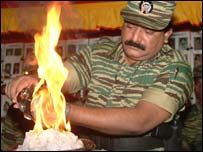
In his recent annual speech marking the Tamil Tigers' war dead, their leader, Vellupillai Prabhakaran, warned there may be no alternative but to return to the freedom struggle. However, his statement that he had reached the limits of his patience may not be taken too seriously by the Sri Lankan government. Only a week ago, President Chandrika Kumaratunga urged the Tamil Tigers to be prepared for talks, saying she was not prepared to go back to war. The peace talks stalled in April, 2003, but a ceasefire agreed in February 2002 remains in force, despite isolated incidents of killings blamed on both sides.
The carrot of foreign aid remains an important incentive for all sides in the conflict and has been the main driving force behind the peace process. Donors have warned that the full package of $4.5bn pledged in Tokyo last year is directly attached to the progress of peace. Investment opportunities After 20 years of civil war, the ceasefire has been a relief for both sides. The worry is that any further deterioration in the security situation in eastern Sri Lanka will hamper the prospects for future peace initiatives. Although the economy, ruined by the war, has not made great leaps forward, the relative peace has given many opportunities for investors, and industries such as tourism have started to boom. In the north of the island, peace has been a welcome replacement to the constant shelling of war, allowing people to get on and cultivate their land. As a result, some analysts say both the government and the Tamil Tigers are becoming comfortable with the present situation where there is no war, but no permanent peace either. Crisis of loyalty But there are some sources of instability in the current situation to make anyone wary of complacency. The government has constantly accused the Tamil Tigers of killing opponents.
These killings have increased since the Tigers suffered a crisis of loyalty with their commander in eastern Sri Lanka, Col Karuna, splitting from the organisation. The Tigers blame the government for helping Col Karuna and for carrying out counter attacks on Tiger supporters. The situation has become very volatile in the eastern district of Batticaloa. On the political front, the main obstacle to the resumption of peace talks is the position of the government's coalition partner, the Sinhala nationalist Janatha Vimukthi Peramuna (JVP) party. It threatens to leave the government if peace talks are started on the basis of the Tamil Tigers' demand for an interim self-governing authority in the main Tamil-dominated areas of the island. The government seems to be sending mixed signals about the peace talks because of the pressure it is under from the JVP. The Tamil Tigers say the ball is in the government's court. At present there seems to be little effort on either side to drive the peace process ahead. The worry is that any further deterioration in the security situation in eastern Sri Lanka will hamper the prospects for future peace initiatives. |
| ||||||||||||||||||||||||||||||||||||||||||||||||||||||||||||||||||||||||||||||||||
| |||||||||||||||||||||||||||||||||||||||||||||||||||||||||||||||||||||||||||||||||||
| |||||||||||||||||||||||||||||||||||||||||||||||||||||||||||||||||||||||||||||||||||






 Email to a friend
 Printable version