| | | | | | | ||||||||||||||||||||||||||||||||||||||||||||||||||||||||||||||||||||||||||||||||
| | |||||||||||||||||||||||||||||||||||||||||||||||||||||||||||||||||||||||||||||||||||||
|
Maldives 'embracing the future' | |||||||||||||||||||||||||||||||||||||||||||||||||||||||||||||||||||||||||||||||||||||
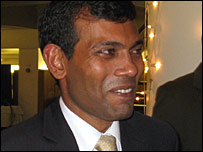
The president of Maldives, Mohamed Nasheed, says he is struggling to change the legacy of the decades of authoritarian rule due to lack of infrastructure and facilities. In a wide ranging conversation with BBC Sinhala service, the president said that both education and judicial systems in Maldives are not functioning properly. In addition, he says, nearly ten percent of the population is addicted to drugs. Delivering a lecture at the Royal Commonwealth Society in London on Embracing the Future, the young president, 41, pledged to work on resolving issues affecting youth such as drug addiction and Islamic radicalisation. “Almost 30,000 youth in the Maldives are addicted to hard drugs. This is a very serious issue and it is very challenging and difficult,” he told BBC Sandeshaya after delivering the speech. The president was on his first official tour to the United Kingdom seeking investment and says he is confident that his government could achieve its targets. Judiciary It is quite unusual for a head of state to openly criticise the judicial system let alone to describe it as dysfunctional. “The judiciary in the Maldives is not functioning as it should in a functional democracy,” he said.
Critics may point out that the man who was imprisoned 12 times during the last decade by the former president, Abdul Gayoom, may be trying to take revenge on the system that punished him for speaking up against what he thought was wrong. He says he has no such intention. “But my imprisonment was certainly illegal. All of that was illegal,” he told BBC Sinhala service. Arguing that the whole judicial system needs to be rebuilt, Mr. Nasheed says his government is planning to train new judges and build new infrastructure. “The most important thing is to ensure that the Executive does not meddle with the judiciary and I am not going to interfere with it,” he says. The country has also inherited and education system “that do not educate the children,” according to Mr. Nasheed. Sri Lanka and Burma Rather than blaming others for the country’s failures, the president says, he is determined to lead by example. Every time there was a change in the administration in the past, there was violence and past leaders were locked up and the president says he is determined not to repeat that trend.
The president also expressed concern over the Islamic radicalisation in Pakistan. It influences the youth in Maldives, he said, but his way of tackling it will be to strengthening democracy in the country. The young president who is also a writer pledges to offer a safe haven for threatened Burmese (Myanmar) writers in Maldives. The audience at the Royal Commonwealth Society burst into laughter as he announces: “At least until the Generals come to get us,” referring to Burmese military leaders. There was no similar offer for journalists in Sri Lanka, where at least 12 journalists were killed in the past few years and dozen others have fled the country due to threats and intimidation. He expressed deep regret over the killing of Sunday Leader editor, Lasantha Wickramathunga, whom he described as a very close friend, in Colombo on 08 January 2009. Sri Lanka war “I think the media is still very resilient and vibrant in Sri Lanka. Of course when you have a civil war going on life is going to be precarious and dangerous,” Mr. Nasheed told the BBC. Even as the international concern about the fate of civilians in the Vanni is growing along with a call for a ceasefire, the Maldivian president has come out with full support to Sri Lanka. “Democracies do have wars. I am confident that Sri Lanka is drawing towards a solution there now. People in Sri Lanka have tried all sorts of solutions, all sorts of processes. I am confident that President Mahinda Rajapaksa will bring in an amicable solution to the issue,” he told the BBC. “I think people of Sri Lanka will redefine themselves, they will metamorphosis, they will change and they will come back with new forms”. He also thanked Sri Lanka and India for “excellent support” since he took over in October 2008. | LOCAL LINKS  Maldives vows to open state media Maldives vows to open state mediaSandeshaya Carbon-neutral goal for MaldivesSandeshaya Maldives rises to climate challengeSandeshaya Country profile: The MaldivesSandeshaya UNESCO honours Lasantha07 April, 2009 | Sandeshaya Sri Lanka journalism 'under threat'Sandeshaya Media attacks by 'army intelligence'09 January, 2009 | Sandeshaya Top Sri Lankan editor shot dead Sandeshaya | |||||||||||||||||||||||||||||||||||||||||||||||||||||||||||||||||||||||||||||||||||||
| ||||||||||||||||||||||||||||||||||||||||||||||||||||||||||||||||||||||||||||||||||||||
| ||||||||||||||||||||||||||||||||||||||||||||||||||||||||||||||||||||||||||||||||||||||