 | | | | | | | ||||||||||||||||||||||||||||||||||||||||||||||||||||||||||||||||||||||||||||||||
| | |||||||||||||||||||||||||||||||||||||||||||||||||||||||||||||||||||||||||||||||||||||
|
'Hundreds of' Indian Tamils detained | |||||||||||||||||||||||||||||||||||||||||||||||||||||||||||||||||||||||||||||||||||||
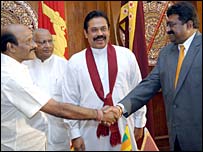
The President of Sri Lanka, Mahinda Rajapaksa, has ordered the police to take immediate steps to release detained Tamil youths of Indian origin. In a meeting held with union leaders of plantation workers, Mr. Rajapaksa has ordered the police to produce those accused of any wrongdoings before the courts. Leaders of the Up Country Peoples Front (UPF), Minister P Chandrasekaran and Deputy Minister P Radhakrishnan met the Head of State to discuss the issue on Saturday.
Nearly 400 Tamils of Indian origin were arrested by the security forces during the last few weeks, Deputy Minister for Vocational Training Radhakrishnan told BBC Sandeshaya. 116 of those arrested - 108 boys and eight girls - have been sent to the "infamous" military detention camp in Boossa, the minister said. Boossa camp The camp has been used in the late 80s to detain hundreds of Sinhala youths who took arms against the Sri Lanka government.
Police authorities, meanwhile, accused the minister of "exaggerating" the figures. “We did not arrest hundreds of youths from Up Country,” Deputy Inspector General (DIG) in charge of Western Province told the BBC. DIG NK Ilangakoon told bbcsinhala.com that Minister Radhakrishnan’s calculations were "false" but did not elaborate. Looking for a better life Over one million Tamils of Indian origin have made their home in picturesque plantations in the Up Country in Central Sri Lanka. The increasing cost of living, poverty and the desire to find a reasonable life has forced some of the younger generation into the capital and suburbs.
Many have been working in the catering industry while many others are still employed as domestic workers. However, they have become a vulnerable groups under the new tough security measures as many do not posses National Identity cards. They have to pass many check points on the way to Colombo. “10-15 Tamils youths are daily arrested in one journey, for example, from Nuwara Eliya to Colombo,” says UPF vice president, A Lawrence. The UPF, a major union representing Tamils of Indian origin, last year joined President Mahinda Rajapaksa’s government. 'Rehabilitating' Tamil youths The UPF leaders accused the authorities of not living up to an earlier pledge to discuss the arrests with the UPF officials. The Defense Affairs spokesman, Minister Keheliya Rambukwella, who did not deny detaining Tamils of Indian origin in cordon operations, said it is the duty of the government to guide the “misguided” youth.
The Boossa camp is used to “rehabilitate” the youths who have either voluntarily left or captured from the Tamil Tigers, Mr. Rambukwella said. Reacting to Minister Rambukwella, Mr. Radhakrishnan categorically denies those currently detained in the camp are members of the Tamil Tigers. “They have no connection whatsoever with the LTTE. These are poor young people looking for a better future in the capital,” he told BBC Sinhala. “We urge the authorities to charge those accused or release them otherwise”. Human Rights Commission Sri Lanka’s National Human Rights Commission (SLHRC) has also accused the authorities of failing to comply with their legal obligations. SLHRC Additional Secretary, Nimal Punchihewa, said the authorities are obliged to inform the Commission of any such arrest within 48 hours. The Emergency Regualtions do not empower the security authorities to arrest anybody without a justifiable reason, according to the SLHRC.
“In many occasions the Supreme Court has ruled that no arrest can be made under the Emergency Regulations without a proper reason” Mr. Punchihewa said. “it is the duty of the SLHRC to visit the camps and investigate provided we are duly informed," he added. The UPF have warned that the government might soon find these measures counter-productive. It is the opinion of the union leaders that the LTTE do not currently enjoy a strong support among the Up Country Tamils. There is strong possibility that Tamils youths of Indian origin soon turn to Tamil Tigers if the current trend continues, human rights activists warned. | ||||||||||||||||||||||||||||||||||||||||||||||||||||||||||||||||||||||||||||||||||||||
| ||||||||||||||||||||||||||||||||||||||||||||||||||||||||||||||||||||||||||||||||||||||
| ||||||||||||||||||||||||||||||||||||||||||||||||||||||||||||||||||||||||||||||||||||||









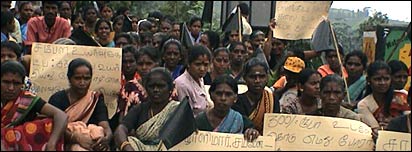
 They have no connection whatsoever with the LTTE. These are poor young people looking for a better future in the capital
 Abductors had 'political backing' - Gunaratnam