| WEBLINKS |  | West Mercia Police
This website has a page on crime prevention with a good section on preventing domestic burglaries
Stop, Chain, Check
Facts about bogus callers targeting older people. The average age of the victim is 81.
Crime Reduction
Advice from the Home Office. Whether its property security, mobile phone theft or vehicle crime, the government has advice on how to prevent it.
The BBC is not responsible for the content of external websites. | | SEE ALSO | | Cracking Crime
More about the BBC's Cracking Crime Day.
bbc.co.uki Crime
The BBC website about crime and how to protect yourself against it - with a special section on crime and the elderly. | | | BE SAFE | | There are around 12,000 incidents of "distraction burglary" each year, where callers get into homes and then steal cash or valuables while the occupier is distracted in some way.
Sometimes they work in pairs, with one doing the talking while the other is stealing and they often target the elderly.
As part of the Government's "Stop, Chain, Check" campaign, local councils, social services and Age Concern centres have further information they can provide to older people.
They can also help with door viewers, chains and mirrors, and in certain circumstances, may be able to supply a personal attack alarm that connects through to a control centre. | | | SAFETY TIPS | | Often conmen pretend they are from public utility companies. Check their identity. Send them away if you`re not happy.
If there is only a mobile phone number, beware.
You might call it to check, only to find yourself being 'put through' to an accomplice round the corner.
Keep genuine numbers of the water board and your electricity supplier handy.
Check if you have doubts. If you`re still not happy, call the police.
If you are convinced the caller is genuine, or they have an appointment, and intend to let them in, lock your back door before unlocking your front door.
Remember you can always ask the caller to return when you have a friend in the house with you. Genuine callers won't mind. If a caller is in the house, don't let them out of your sight. Above all, don't keep large sums of cash in the home. Banks and building societies are the best place to keep your money safe. | |
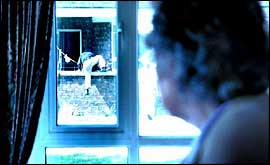
|  | It could be any day, in any Shropshire street. A young boy knocks on the door and asks if he can get his ball back. In a second he's through the garden gate and off on his 'search' of the flower beds.
In the time it's taken for him to chat to the elderly householder, someone else has nipped in through the front door and has helped himself to hundreds of pounds stashed away in an old tea caddy.  | The elderly are vulnerable |
This is the classic kind of distraction burglary plaguing Shropshire pensioners. And it`s the kind of crime PC Phil Drapier from Shrewsbury police describes as 'despicable'. 'This is a beautiful place to live, scenic and with a relatively low crime rate,' says PC Drapier.
'There`s a fairly large population of older people, with many having chosen Shropshire as a place to retire. But for the distraction burglar, potentially, that means rich pickings.' It's the steadily growing number of so-called distraction burglaries which prompted ten Midlands forces to band together recently to crack down on the criminals, in a blitz they`re calling 'Operation Liberate'. 'Distraction burglars know their targets,' says PC Drapier.' They prey on the elderly because often, members of the older generation are more trusting.' 'The reasons they give for calling on their victims seem plausible. Sadly, that child who knocks on the door asking for his ball back is often being 'used' in the crime by an adult, sometimes his own parent'. PC Drapier says distraction burglars are usually looking for jewellery and cash. They know that many older people are still reluctant to put all their savings in their high street bank. 'Occasionally we find that cash has been hidden in eiderdowns;in plant pots, under the bed all kinds of places. Sadly these criminals know where to look. They'll slash open an eiderdown in seconds rip up floorboards sometimes.' Such damage is bad enough, but PC Drapier says the worst kind of cases are those involving the victim who faces violence. 'It can happen when someone tries to intervene. For a frailer person the effect can be traumatic even fatal.' Operation Liberate aims to target the people behind such crimes. It`s using a linked computer system with a common database of information It's also about raising awareness of the problem. PC Drapier points out that with a few common sense precautions, it's possible to avoid the risk of being targeted or tricked into parting with your cash.
Have a door chain or door bar fitted; and a door viewer. Slip the chain on BEFORE you open the door. Ask yourself whether you were expecting a caller. If not, be on your guard.
Make sure your back door is locked if someone knocks at your front door. Sometimes thieves work together with one coming in the back way, while the other keeps you talking at the front. Keeping the chain on the door. Ask callers from the council or any other organisation to pass through some identification. If you need your glasses to check this don't think it's rude to close the door and go and get them. A genuine caller won't mind.
If you're still not sure, ask the caller to leave and tell them to write and make an appointment so that someone else can be with you the next time they call. The basic rule is if you don't know the person at your door don't let them in. As part of the Government's "Stop, Chain, Check" campaign, local councils, social services and Age Concern centres have further information they can provide to older people.
They can also help with door viewers, chains and mirrors, and in certain circumstances, may be able to supply a personal attack alarm that connects through to a control centre. |