 | 13 November 2014 |

| |
| BBC Homepage | | |
| |||
| Contact Us | | |
EnvironmentYou are in: Shropshire > Nature > Environment > Incinerator for Shrewsbury? 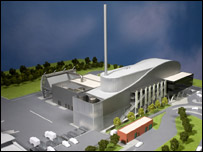 Proposed Energy from Waste Facility Incinerator for Shrewsbury?Battlefield Enterprise Park in Shrewsbury could be the site of an Energy Recovery Facility incinerator if waste management operators get their way. But should we be worried, and is there a realistic alternative? Veolia submitted a planning application for a 'Energy from Waste Facility' to Shropshire County Council in January and public consultation officially closed on 30 April.Shropshire's new unitary authority is being urged not to give the go-ahead to a waste incinerator near Shrewsbury. In June the town's Conservative MP Daniel Kawczynski called for a more "modern and greener way to dispose of waste" and said there was "huge opposition" to the incinerator. The BBC is not responsible for the content of external websites
A proposal to build an Energy Recovery Facility incinerator (ERF) on Shrewsbury's Battlefield Enterprise Park has proved a hot topic. It was given extra focus with Shropshire Waste Partnership's decision in 2007 to award their integrated waste management contract to Veolia Environmental Services for the next 27 years. 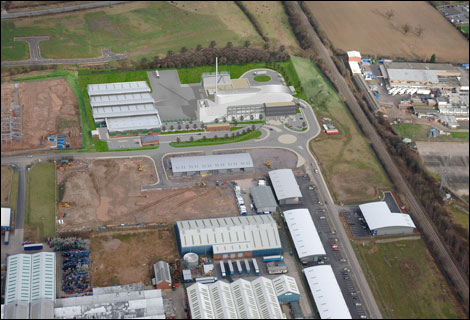 Proposed Energy from Waste Facility The incinerator was just one of the proposals outlined in Veolia's original bid. Other plans to minimise waste and landfill, and increase recycling, have proved less controversial. Veolia aims to reduce the amount of Shropshire household waste sent to landfill from 65% in 2005/06 to just 5% by 2015, while increasing recycling to 50% by 2012. ERF incinerators burn household waste to produce electricity. According to Shropshire Waste Partnership the ERF at Battlefield would only target rubbish 'unsuitable for re-use, recycling and composting'. The proposals expect it to burn up to 90,000 tonnes of household waste per year and generate up to 8MW of electricity 'enough to power over 10,000 homes'. 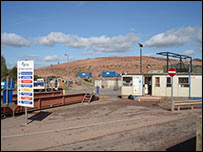 Granville landfill site Currently waste from across Shropshire that cannot be recycled or re-used is buried at local landfill sites, including Granville and Candles in Telford. Arguments about building an ERF in Shrewsbury are focused on whether Battlefield is the right place for an incinerator and whether there is a safer, cost-effective alternative. The BBC is not responsible for the content of external websites Managing wasteShropshire Waste Partnership covers five local councils: North Shropshire District, South Shropshire District, Shrewsbury and Atcham, Bridgnorth District, Oswestry Borough and Shropshire County Council. From 1 April 2009 they will be merged into one unitary authority. Veolia's plan earmarked Shrewsbury's Battlefield Enterprise Park as the site of the possible ERF. Shrewsbury and Atcham Borough Council was not part of Shropshire Waste Partnership until 6 October 2008, and therefore were not involved in awarding the contract to Veolia. 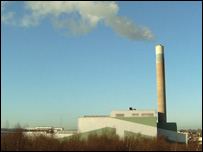 Incinerator in Stoke-on-Trent Veolia's plans for an Energy from Waste facility first came to light when they were announced as preferred bidder on 30 August 2007. The integrated waste management contract was signed on Friday 28 September 2007 and covers until 2034. The sight (and even suggestion) of an incinerator chimney is undeniably a powerful stimulator of opinion. Part of the problem with the proposed building of an incinerator rests with the county council's own Waste Local Plan 2002-2014 (adopted in October 2004). It's essentially the reference manual for waste management in the county until 2014 and specifically refers to Battlefield Enterprise Park. It also explicitly excludes the development of 'mass burn incineration' (section 6.51; schedule 1). However, an earlier part of the same document (section 6.45) also emphasises that the plan is 'site specific', rather than 'process specific' to 'provide flexibility for the waste industry to bring forward new facilities and encourage innovative waste management technologies.' PlanningThe key battle between supporters for and campaigners against the ERF incinerator will be fought during the planning process, and particularly the consultation period. Shropshire County Council will be responsible for granting or refusing the planning application. Speaking on BBC Radio Shropshire's Jim Hawkins in the Morning show on 26 September 2007, Shropshire Waste Partnership Director Adrian Poller was quick to point out that despite being a major stakeholder in Shropshire Waste Partnership, the county council wouldn't automatically grant planning permission: "There is a clear split in function between the county [council] acting as contracting authority and as planning authority. 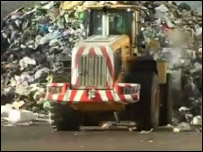 Dealing with waste at Battlefield "The planning process is a semi-judicial process. It has to be carried out in strict accordance with a set of rules that are laid down locally, regionally and nationally. It [the county council] has to rigorously check the application and can turn it down." However, if the application is refused it would create a major stumbling block for both Shropshire Waste Partnership and Veolia Environmental Services, whose ambitious targets for reducing landfill depend to a large extent on the ERF. It's not the company's only tool to reduce landfill, but it's difficult to see how the 5% figure could be reached without incineration. Within Shropshire every household produces on average about 1.3 tonnes of waste every year, a total of 185,000 tonnes. Over the last five years recycling rates have increased across the county, with some councils performing better than others. Recycling and composting rates in 2005/06 by local authority
Source: Defra, published 15 December 2006 The best-performing English authority in 2005/06 was North Kesteven in Lincolnshire, with residents recycling 51.1% of household waste (the only area at the time to break the 50% barrier). Yet, just four years earlier, North Kesteven's recycling rates stood at only 3.4%. A relatively small population of less than 100,000 has allowed simple changes to lead to impressive results. 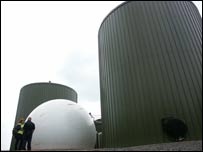 Ludlow's biodigester South Shropshire's biodigester went on line in March 2006 and more recently a service has been introduced to collect food waste from businesses in Ludlow town centre. Early indications suggest that both changes are likely to have a big impact on the next set of recycling statistics for South Shropshire. Shrewsbury and Atcham, with the poorest record on recycling within the county in 2005/06 is introducing a fortnightly waste collection in October 2007. Green recycling bins, as well as green and blue boxes will also be collected on alternate weeks to black bin waste. Experience across the country (except arguably in the case of inner cities) suggests that the introduction of additional kerbside services leads to an immediate increase in recycling rates. ChoicesThe reality of 21st Century waste management is that in an era when people are more motivated by environmental issues than ever before, we are just starting to discover how few choices are available to us and those that are on-hand seem to offer little encouragement. Waste recovery via incineration is not a silver bullet. But, in Waste Strategy for England 2007 (published 24 May), Defra suggests that it is preferable to landfill. In April 2007 the Local Government Association (LGA) told its members that at current rates space for landfill would run out within nine years. Tough European legislation demands a 25% reduction on 1995 landfill levels by 2010 and a 65% cut by 2020. As a result, the Waste Strategy for England 2007 document proposes 'increasing the landfill tax escalator so that the standard rate of tax will increase by £8 per year until 2010/11'. According to the LGA: 'By 2010 councils, and consequently the taxpayer, are facing fines of up to £150 per tonne of rubbish that is sent to be dumped in landfill sites over a set quota.' Climate change and healthWhile lacking the emotive impact of a smoking chimney, landfill also contributes to climate change. Defra argue that methane produced by landfill is 21 times more potent than carbon dioxide. Friends of the Earth agree that landfill is the most climate-damaging option available, although they suggest that electricity-only incineration is only marginally better. The environmental pressure group also argue that incinerators that produce heat-only or combined heat and electricity are less environmentally damaging than electricity-only incinerators. It's unclear whether this has been considered at Battlefield. Only four of the UK's 20 existing ERF incinerators produce anything other than electricity, although there are many more examples in continental Europe. Despite European legislation tightening-up the emission levels of incinerators, health concerns persist. In an article published on 31 March 2005, to accompany the BBC Two series IF, Dr Vyvyan Howard (Head of Research, Developmental Toxico-Pathology Research Group) argued that incinerator health risks were 'unacceptable'. He suggests that the problem lies with modern products which contain: 'high levels of heavy metals and, in addition, synthetic plastics such as PVC'. The emissions produced by an incinerator inevitably depend on what is fed into the facility. Certain plastics are among the greatest cause for concern among health campaigners. There are more than 50 different types of plastic and in 2007 experts estimated that just 7% of the two million tonnes of plastics waste are recycled each year - meaning 93% enter the waste stream. Recyling David's canAs part of an integrated waste strategy Veolia plan to introduce a kerbside plastic bottle collection service in all four districts that they cover by 2010. Kerbside recycling could make all the difference - Paul Davidson, Plastics Technology Manager at WRAP (Waste & Resources Action Programme) suggests: "Kerbside systems... on average outperform 'bring' schemes by four to one."
Over recent years European regulation has introduced increasingly more stringent regulation of incinerator emissions. In the 1990s a number of incinerators across the continent were closed down or upgraded to meet limits set out in the Municipal Waste Incineration Directives (89/369/EEC and 89/429/EEC). Technology has also played its part, with better filter methods being introduced. The incinerator being proposed for Battlefield would incorporate both a gas scrubber and a bag filter to reduce both gas and particulate emissions. Ash produced as part of the process would be sifted, recycled where possible and the remainder sent for disposal. In a 2004 report for Defra, its Chief Scientific Adviser Professor Howard Dalton comments "that the effects on health from emissions from incineration, largely to air, are likely to be small in relation to other known risks to health... particularly bearing in mind the current generation of municipal solid waste incinerators have to comply with much more stringent emission standards." (Published within the Foreword of Review of Environmental and Health Effects of Waste Management: Municipal Solid Waste and Similar Wastes). Professor Dalton also identifies the need to monitor emission levels and ensure that they are maintained within the strict regulated limits. In 2003, Environment Agency records identified '56 incidents of emissions outside of permitted levels' among the UK's 14 energy recovery incinerators. Most of these were minor incidents, covering short periods, with little identified impact on health or the environment (see page 71 of the above document). Whether the UK should be pursuing a greater proportion of heat-only incinerators (as Friends of the Earth suggest) it's likely that ERFs will play an ever-greater role as the UK attempts to tackle its landfill crisis. It could even be argued that the UK should have been quicker in adopting incinerators. European countries with much better environmental records than the UK make good use of ERFs. According to 2000 statistics, while Denmark incinerated 52% of its municipal solid waste (MSW), Sweden 39%, France 33%, Germany 23% (1999 data), the UK's figure stood at only 9% (1999 data). That represented 49 kg per person, compared with Denmark's 347 kg per person. Only Spain, Italy and Ireland incinerated less. For full figures see Table 2.23 (page 73) of Review of Environmental and Health Effects of Waste Management: Municipal Solid Waste and Similar Wastes (published by Defra in 2004). Wasting lessThe incineration data quoted above cannot be taken in isolation. Many of the countries that incinerate more than the UK also produce less overall waste, recycle a greater proportion of it and recycle a greater number of different items. Countries with good plastics recycling, for example, can also influence the substances emitted by incinerators. In efforts to tackle climate change, and reduce our overall impact on the environment, the most important step is to reduce the amount of waste produced and where possible re-use items. Many of the country's biggest retailers signed up to the Courtauld Commitment to reduce packaging 'to design out packaging waste growth by 2008' and 'to deliver absolute reductions in packaging waste by March 2010.' Food packaging contributes to the second most-binned material - plastics (18%). Food waste itself represents the biggest bin-filler. On average in 2007 British consumers threw away £400 worth of food every year. And according to a 2006 Open University survey kitchen scraps make up 34.4% of household 'black bin' waste (by far the largest overall contributor). Yet in most parts of the UK it's impossible to recycle food waste (unlike garden waste). South Shropshire's biodigester puts the local authority in an enviable position. Veolia's proposals include the 'construction of an in-vessel composting facility, which will allow the treatment of all compostable waste, including all food waste'. 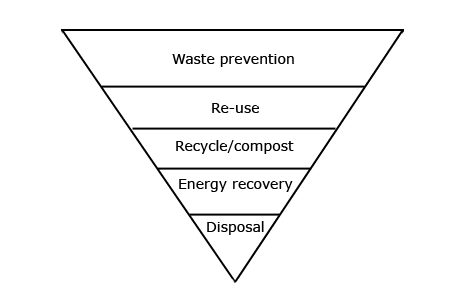 The waste heirarchyWhile recycling has practically become a 21st Century crusade, it is actually less important than both reducing waste and re-using items, because it inevitably involves energy consumption and therefore carbon dioxide emissions. However, it's notoriously difficult to calculate the negative impact of recycling on the environment. For example, using recycled aluminium to produce tin cans reduces the consumption of natural resources, but carbon dioxide is still produced in collecting, sorting, transporting and processing waste aluminium. If old cans have to travel half-way across the world, then the environmental impact is greater than if they just have to travel a few miles. Despite the energy consumed in recycling, it's still infinitely kinder to the environment than waste recovery and landfill. North Kesteven's recycling of 51.1% of its waste is something that Shropshire can and should emulate. European legislators, central government, local authorities and environmental pressure groups all agree that we need to minimise waste, re-use material where possible and maximise recycling - and the UK has a long way to go. However, no matter how much we improve in all those areas, there will always be waste to dispose of. International experience suggests that, at least in the immediate future, incineration will play a key role. last updated: 16/06/2009 at 15:28 Have Your SayDoes Shropshire need an incinerator, and how should we better manage our waste? Geof Proffitt Paul Clack Guy Fawkes chris James Reeves Gill Davis lewlew. Dorothy Jones les Michel Nijsten Sue Boulding Brian Smith Sarah Roper, Crosshill wendy dimarco linda crane jay syrett judd David Allen Manfred Spille Diane Greenfield Roger Wain Michael Ryan J Jex N worthing alan-stewart@hotmail.co.uk E Jones DA Jem Rob Whittle N Dean Mrs.S. Lewin. evron Evan Evans Tony Warner Val Oldaker Huw Peach Barry Ridgewell Mrs MC Lloyd SEE ALSOYou are in: Shropshire > Nature > Environment > Incinerator for Shrewsbury?    5 DAY FORECAST The latest forecast for your area from BBC Weather [an error occurred while processing this directive] |
| | About the BBC | Help | Terms of Use | Privacy & Cookies Policy |
