

 |  |
© SCRAN | |
|
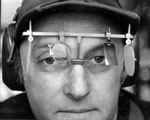
After learning to shoot when he joined the Air Training Corps as a youngster, Alister's Commonwealth successes began in the 1974 games in Christchurch, New Zealand, when he won a bronze medal in the Smallbore Rifle "Prone" category. Four years later, in Edmonton, Canada, he improved upon this performance by winning the gold medal in the same event.
The 1982 games in Adelaide, Australia, proved to be Allan's most successful competition as he won two gold and one bronze medal. He won gold in the Smallbore "3 position" event (40 shots standing, 40 kneeling and 40 in the prone position) and a second as he partnered Bill MacNeil in the "Air Rifle" Pairs. The same duo finished third in the Smallbore "3 Position" Pairs competition.
|  |
© SCRAN | |
|
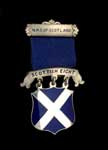
Returning from Auckland without a medal in 1990 might have been a sign that Alister's career was coming to a close, but he returned to form in Canada in 1994, when he won a further two medals in the Victoria games. Paired with Bill Murray, he took the silver in the "3 Position" Rifle Pairs and he also took bronze in the individual Smallbore "3 positional" competition.
Over a period of 20 years, Alister won three gold, three silver and four bronze medals in Commonwealth Games. However, his list of successes did not end there.
In 1978 Alister won the World Championships for the 50 metre Rifle "Prone" category and in 1982 he set a world record, scoring a maximum 600 points in the event.
 | |
© SCRAN | |
|
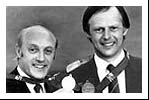
In the USA he finished third and picked up the bronze medal and four years later when he was selected for the same event he improved upon his earlier performance to finish second and get the silver. Each time he finished behind another Briton, England's Malcolm Cooper, the gold medallist on both occasions.
Ironically, the three position event was considered the lesser of "Jock's" chances, but in his preferred option of the prone competition, he finished out of the medals, coming fifth, eighth and ninth.
In 1989 he was awarded the MBE for his services to shooting and when he finally retired from competition he became an international coach. Alister was elected to the Scottish Sports Hall of Fame in 2002.




