

 |  |
© SNSpix | |
|
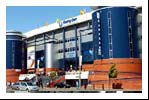
Hampden, which had hosted international football since 1903, had been the scene of many famous games over the years. In 1925 it had a capacity of 125,000, this rose to 150,000 in 1927 and to over 180,000 in 1937, on the completion of the old North Stand, making Hampden the world's largest football stadium. On many occasions the old Hampden Park attracted crowds in excess of 100,000 people, almost unthinkable in this day and age, most notably when a crowd of over 135,000 saw Real Madrid defeat Eintracht Frankfurt 7-3 in the 1960 European Cup Final.
However, massive changes were on the horizon in world football, meaning the only certainty for an antiquated, rotting old stadium, once capable of holding massive crowds, was that change would become inevitable.
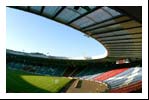
Lord Justice Taylor's report had made it clear that all-seated football grounds, with individual seats for every spectator was the way forward. Although this report, in theory, only effected grounds in England and Wales, both UEFA and FIFA had also recently endorsed this policy. Most major clubs in England were already well on the way to having all-seated stadia, as were most of the leading lights in Europe. It was clear that every major football ground in Scotland would need to follow this lead. Ibrox Stadium, home of Glasgow Rangers had set the standard with a 52,000 capacity all-seated ground. Celtic would soon need to move with the times also, although it would take several more years before the revamped Celtic Park would rise as an all-seated stadium in Glasgow's east end and indeed Celtic themselves would spend a year in tenancy at the new Hampden before that transformation would be complete. In the world of rugby, the SRU had finalised plans for a dramatic transformation of Murrayfield, creating a 65,000 capacity all-seated ground, which would be completed the following year in 1994. The national football stadium could not afford to lag behind.
|  |
© SNSpix | |
|
One of the largest problems with any venture of this size, of course, has been funding. Hampden remains under the ownership of Queens Park Football Club, Scotland's oldest football club and a bastion of tradition, staunchly independent and proudly remaining as the only Amateur club still competing in the Scottish League. Queens Park was in a reasonably sound financial position at the outset of the redevelopment of Hampden.
Queens Park owned the stadium and a not insubstantial total of 33 acres of land around and adjacent to it. They initially set up a subsidiary company The National Stadium PLC, which soon raised £10m towards the cost of redevelopment from stadium debenture sales. The initial estimate of the cost was £60m, although the project cost was finally around £70m, prompting severe criticism from some Scottish politicians, both at Holyrood and Westminster, criticism which seems ludicrous to some with hindsight, given the eventual costs of the Holyrood Parliament building.
Support did eventually come from other agencies, receiving £30m from lottery grants, £18m of grant aid from a range of exchequer funded agencies, led by Sportscotland and £12m from private sponsors, primarily from BT Scotland, which together with the initial £10m from debentures meant that the money was eventually raised.
Page: 12




