

 |  |
© SCRAN | |
|
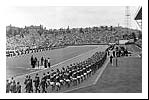
Nearly 1,750 athletes and officials from 42 nations, competing in 10 sports rolled into Scotland's capital city to make the IX games the most highly anticipated anyone had ever known.
The public and athletes were excited by the prospect of using not only metric distances for the first time, but also having new electronic photo-finish technology at their disposal.
The games were not only a chance for some of the world's finest athletes to show their abilities to all round the world, but also for Scotland to prove it was capable of hosting such a prestigious event - and demonstrate that its athletes could compete and win medals against some of the best in the world.
HM Queen Elizabeth II only added to the hype and excitement by attending the games for the first time as Head of the Commonwealth.
Scotland has competed at all the games since 1930 and succeeded in creating an event which lived up to the high expectations and more.
The purpose-built Commonwealth Pool in Edinburgh was a huge success, and as an indication of its excellence, the people of Edinburgh still use it to this day. It comprises a 50m-long main natatorium, which still holds competitions of international status, a separate diving pool, a teaching pool and, for leisure use, a set of water flumes, sauna and health-club facilities.
|  |
© SCRAN | |
|
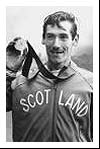
the 5,000m title.
The Stewarts (not related), along with the likes of gold-winning 800m runner Rosemary Stirling and Rosemary Payne, who took gold in the discus, helped take Scotland to fourth place in the overall medals table, which was highly respectable considering only Australia, England and Canada achieved more than the host country. New medal-winning nations included Tanzania, Malawi and St Vincent.
Page: 12





