

 |  |
© RHF Museum | |
|
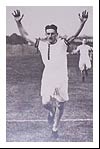
The controversy was played out to the fullest on the track in the final of the 400m. Halswelle won through to the final, setting a new Olympic record of 48.4 seconds in his heat, where he lined up against three American runners: William Robbins, John Carpenter and John Taylor. The drama unfolded as the runners made their way into the final straight. Robbins was in the lead, with Carpenter and Halswelle competing for second place. As Halswelle and Carpenter moved to pass Robbins it appeared that Carpenter blocked the Scot, running diagonally and forcing him to the edge of the track.
Although the practice of blocking was permitted by the American athletics federation, it was most definitely not allowed in the Olympics. The line judge cried "Foul!" and the finishing tape was removed by the Scottish finishing judge just before Carpenter crossed it. After an hour of deliberation, Carpenter was disqualified and the race was scheduled to be rerun the following day.
Unsurprisingly, in the atmosphere, the other two American runners refused to participate in the re-run. Halswelle himself had no taste for it, and only ran under duress, after AAA officials insisted. This constitutes the one and only time an Olympic athletics event has been decided by a walkover. While the debate over the rights and wrongs of this decision raged at the time, picture evidence of the race certainly seems to indicate that Halswelle was indeed blocked.
|  |
© RHF Museum | |
|
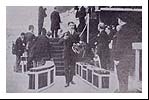
Commanding his troops at the Battle of Neuve Chappelle he was shot and wounded by a sniper. After receiving treatment in the field he heroically returned to his post only to be shot through the head by the same sniper.
However, his name has not been forgotten, as his regiment, now the Royal Highland Fusiliers, award the Wyndham Halswelle Memorial Trophy to the winner of the 400m at the Scottish under-20 championships. Despite the controversial nature of Halswelle's greatest success, no-one should doubt that he was one of the true greats of his time, as his other outstanding achievements testify, and he remains the only British athlete to have won gold, silver and bronze medals in individual Olympic events.
Page: 12





