
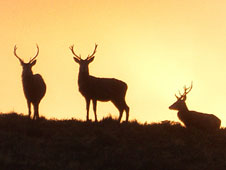
The majestic red deer are a national symbol of Scotland. The largest land mammal in Britain, they are found predominantly in the Northwest Highlands but are widespread throughout Scotland.
An adult stag is a formidable sight due to its sheer size. A typical male would measure around four foot tall to the shoulder and weigh up to 190 kg. The stag's famous antlers are made of bone that can grow at the incredible rate of an inch per day. The velvet that covers the antlers during this stage protects the new bone growth.
The red deer population of Scotland stands at around 300,000. With the extinction of native predators to keep the population growth in check periodic culls take place to ensure the herds are healthy and manageable.
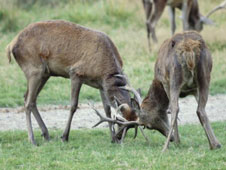
One of the most enduring images of red deer is that of stags locked in combat during the rutting season.
Throughout the autumn, males fight to secure the right to breed. For much of this time stags do not eat and may lose 20% of their body weight. As a result some die from exhaustion while many others, weakened by their exertions during the rut, do not survive the winter.
A dominant stag can have as many as 20 hinds in his harem. His period of dominance is short lived, however. The peak age for a stag is eight years old - by the age of 10 or 11 they are likely to be ousted by a younger, fitter rival.
Where to see them?
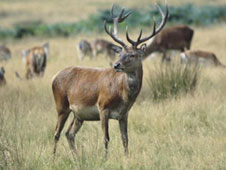
Despite their numbers the deer are not the easiest animals to spot in the wild. During the summer months they tend to spend their time up in the hills and more remote parts of the countryside. During the winter they venture down on to lower ground in search of food.
To guarantee seeing deer it's best to visit an established park. The Highland Wildlife Park at Kincraig, near Aviemore is a great way to get close to these incredible animals.
When to see them?
The autumn rutting season is a great time to see deer at their most active. During these months the males fight and compete for the right to breed with receptive females. Listen out for the distinctive roar of the males during the rut.
During the spring the males shed their antlers and start to grow new ones, and by May and June new calves are born.
Page first published on Friday 4th April 2008
Page last updated on Friday 17th October 2008


Post Your Comment