
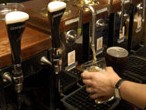
As the big brewers shut down and pull out of Scotland a fledgling industry has begun to rapidly bloom in its place. Scotland has always had a rich history in brewing, but over the last thirty years, the small independents were being squeezed out by the big boys. Now it's a different story.
Boom

During the last ten to fifteen years there has been a dramatic revival with fifty two micro breweries now in operation. But why? How can they succeed when the big boys have so dramatically failed? Ken Davie, the Scottish Director of Campaign for Real Ale (CAMRA)says there are a number of contributing factors:
A growing group of consumers who are fans of the “slow food” ethic. They appreciate localism and quality.
Gordon Brown reduced the level of duty for smaller producers.
Money was awarded in some cases of local breweries by local enterprise trusts.
The big breweries lost control of the pubs.
Scotland has the ONLY fulltime brewing course in Britain at Heriot Watt University.
Brewers become popular
Brian Eaton who runs both a BSC and a post graduate MSC course at Heriot Watt says a huge range of people want to become brewers. He says although his BSC course is mainly filled with foreign students, the MSC post grad attracts all sorts from historians and oil well reservoir experts to medical researchers fed up with cutting up rats. He says people see it as a romantic way to live. There is a long history of brewing in Scotland and it has always been very closely linked to the agricultural cycle.

During the summer months when it was too warm to make malt the workforce were put out into the fields to help grow the barley and the other ingredients needed to distil. Then in the autumn, when the weather grew colder they would be sent indoors to make the malt. With the rise of global players such as Scottish and Newcastle much of this died out. Brian says thirty years ago, we were all drinking the same brands no matter where we were. Now Scottish and Newcastle, don't brew in Scotland and they don't brew in Newcastle and their main markets are in places like Russia. This has left the playing field free for the independents and consequentially lots of different varieties are springing up around the country.
Success
Douglas Ross, himself a microbrewer and the Scottish Chairman of the society for independent brewers (SIBA) agrees that it's the joy of creating a totally individual beer out of local produce from your area that attracts people. He says for years there was no money in micro brewing at all and it was a real struggle to survive. But now, even though the profits are increasing, most producers are simply ploughing it back into their beers trying for even greater perfection.

Douglas says he believes the future for the industry is very bright. The supermarkets have been very supportive and as the interest in “slow food” increases the public desire for individual beers can only increase along with it. The only worry is the supply of raw materials. After a very dry summer last year, the barley crop failed in many parts of the world, putting a huge increase on raw ingredients for the brewers.
Watch the Landward video about microbreweries.
Page first published on Monday 10th September 2007
Page last updated on Tuesday 17th June 2008

