
Will cars be the death of hostelling as we know it? Join the debate on the future of hostels in Scotland.
In 2007, the Scottish Youth Hostels Association (SYHA) decided to close its hostels at Armadale, Coldingham, Glendevon, Inverey, Killin, Kyleakin and Loch Lochy. This decision generated much discussion from members, hostel members and those with an interest in the Scottish tourist industry.
The SYHA claimed the decision was based on increasing running costs of operating and maintaining its properties, saying that some properties were "no longer viable" for an organisation with a duty to make best use of funds and resources.
The announcement followed a management review of the organisation, which operates on a not-for-profit basis and has charitable status. It has been operating for 75 years, and currently owns or manages 68 properties across Scotland.
Management review
Chief executive of the SYHA, Keith Legge, said: "The balancing act faced by the SYHA is to attract as much revenue as possible from our most popular and city centre hostels to support and maintain the rest of the network including our remote rustic hostels."
"These are the core of our history and ethos and there is no way that we will turn our backs on them. However, they do not bring in enough revenue to cover associated costs and we have to balance the books somehow”.
He added: " The decision has been made to sustain the secure future of the network as we know it. We are listening to our customers and responding to what they say they want to experience and where they want to go”
Local communities
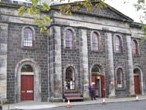
An expected £3m will be released by the closure of the seven hostels. The SYHA argues that the cost of retaining and improving some of the hostels to the standard expected by today's visitor would cost in excess of £3m, making them financially untenable.
The association's intention to invest in hostels located in "popular areas" and investigate opportunities for investment in new locations met some disagreement from those concerned over the effects of these closures on local communities.
However, the SYHA countered this by saying some of the hostels may be available for private investments, perhaps to be run by the communities themselves.
Some of the closures reflect the changing nature of the tourism market in Scotland. The SYHA hostel network was initially based on locations being one day apart on foot or by bicycle, a reasoning which could be said to be coming irrelevant to today's market.
A spokesman from VisitScotland said: “The hostel market in Scotland is changing and it is encouraging to see that hostels, responding to consumer demand, are diversifying and being ever more flexible in their response to the demands of the marketplace."
Car ownership
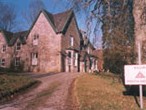
The SYHA was set up to take working families away from cities for the weekend to enable them to experience the countryside, and vice-versa at an affordable price. Most people travelled by bus or cycled to reach the hostels.
Modern families have more spending power and are more likely to choose to go abroad or to themed destinations for the weekend.
Keith Legge said: "Our main market these days are families, groups and activity seekers so we need to ensure that we offer accommodation in places that provide the type of attractions that they are seeking.”
Those choosing to visit areas of Scotland quite often drive to their destination and back in the same day or choose to stay overnight in a town or village within walking or cycling distance of the attraction they wish to visit.
One example is the hostel at Killin, on the list of those facing closure. A spokeswoman for the SYHA said that instead of cycling from cities such as Glasgow to hostel in Killin, the majority of cyclists now drive to Killin, cycle around the area and then drive back to the city at night, with the result that the hostel has been running at low capacity.
Independent hostels
The increase in independent hostels and backpackers' accommodation has proven a problem for the SYHA, who say the competition is not on a level playing field as other operators do not have the same running costs.
Keith Legge said: "Our competitors are maybe running one or two properties offering 20 – 30 beds. They have access to development funds and farm diversity schemes while we do not receive any direct funding from local authorities or the Government”.
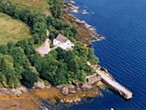
The SYHA chief executive added: "Our overseas visitors tell me that they find Scotland a very expensive destination, it may be cheap to get here but travel, accommodation and eating out is expensive. Our dilemma is that if we charged the true cost of providing our 'budget' accommodation, it would no longer be within the budget of these visitors.”
In July, managers of Edinburgh's independently-run Smart City hostels celebrated their receipt of a 5-star grading from VisitScotland. Their innovative city hostels are designed for the youth tourism market, are located close to clubs and bars and have internet access. Their hostel in Edinburgh welcomes hen and stag parties, and has a female-only floor where "additional toiletries and pampering products for single woman and groups" are available.
SYHA membership
With membership of the SYHA on a slight but steady decline, the percentage of life memberships is rising in number and percentage. This demonstrates a commitment to the ethos of hostelling in Scotland, and many remain life members although they themselves are no longer able to visit the hostels.
One such example is Doug Smith, from Turriff. In a call to BBC Radio Scotland's Out of Doors programme, Mr Smith described himself as "80-plus". He has been a life member since 1949, and has a keen interest in hostelling in Scotland.
He said: "I always found the hostels hospitable, I was never out of place in a hostel, it was the same as I had at home - just the basics. And at the hostels everyone is your friend, you just have to speak to people and say hello."
Although he describes the hostels as "too modern, too comfortable", Mr Smith said that he fully supported the traditional hostelling ethos. He said he believed there was still a need for affordable, welcoming budget accommodation accessible to all, and suggested that bothies are now an alternative for those needing budget accommodation in Scotland's outdoors.
Another caller to the programme, Bill Ward from Glasgow, said that hostels should raise prices in order to fund the repairs and upgrades rather than closing hostels.
Your comments
Would like to join in the debate over the future of hostelling in Scotland? Fill in the form below or send an email.
Page first published on Friday 12th October 2007
Page last updated on Tuesday 23rd December 2008


Post Your Comment