
BBC Scotland political reporter John Knox goes down to the woods to see how the Central Scotland Forest is growing.

It's over 15 years since the first tree was planted in the ambitious project to reclaim the industrial wasteland of central Scotland. Since then, over 13m other trees have been planted, 250 miles of pathways laid and a thousand hectares of derelict land reclaimed.
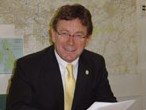
But the head "forester" Simon Rennie, otherwise known as the chief executive of the Central Scotland Forest Trust, said:
"The forest is not just about trees. It's about employment, housing, leisure, health, wildlife, education, wealth. I believe there's a direct link between deprivation and a poor environment. The figures for Central Scotland show that relationship very clearly. Improving the environment is one way of tackling poverty."
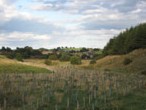
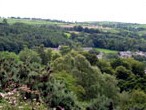
The idea for a "social forest" for central Scotland began in 1991. The forest is in fact a mosaic of woodlands, farmland, pathways, canals, riverbanks, all mixed in with housing developments and new industrial estates.
It stretches across 620 square miles between Glasgow and Edinburgh and is the biggest "new forest" in Britain.
Children are introduced to the forest though a forest schools programme. St Patrick's Primary School in Shotts is one of the schools which has sent its pupils into the woods.
"We saw a lot of foxes and other animals all around us and birds were flying over the tops of the trees," one young explorer told me. Another said: "We learned about fire and how fast it could spread." And still another was positively poetic: "We got a chance to be free!" she said.
Their teacher Claire Munogee wants to do it all again. "The children were so enthusiastic about learning," she said. "And not just in the forest but also in the classroom. The children's work rate improved. And the skills they learned - like observation and co-operation - are not so easily taught in the classroom."
The forest has a biomass programme. Boilers in four local public buildings have been converted for wood fuel. There's a "green gym" programme to improve peoples' health by exercising in the forest. There's a volunteer programme with gangs of willing workers planting trees, creating ponds and pathways.
And there's also a wildlife and biodiversity programme. Rare bean geese are now seen wintering on the Slammanan Plateau near Falkirk. Over 2,000 public events have been organised.
The Central Scotland Forest Trust has a budget of £2.5m and a staff of around 30. Most of the money comes from the Forestry Commission, from the local authorities in its area, from local landowners and from housing developers keen to satisfy the planning authorities that they are doing something for the environment.
"We're got rather a spider's web of funding," said Simon Rennie. "We have to knit resources together from many different organisations because the forest comes under so many headings."
There's an ambition to double the size of the forest. It already covers 11% of central Scotland. There are plans to plant ahead of housing developments so that, several years from now, homes can be built in the midst of mature woodland.
So the landscape that gave us the industrial revolution may now help us the achieve our environmental aims. Scotland's rust belt could become its green belt.
Page first published on Friday 12th October 2007
Page last updated on Tuesday 17th June 2008


Post Your Comment