Ask about WW2 in the Far East
 On Saturday 13th August 2005 BBC Two Scotland screened a VJ Day special, 'VJ Heroes - Scotland's Jungle War'. The programme remembered the main conflicts of the campaign in the Far East, as told by the men who actually fought there and faced the Japanese, from the fall of Hong Kong and Singapore to victory at Kohima. On Saturday 13th August 2005 BBC Two Scotland screened a VJ Day special, 'VJ Heroes - Scotland's Jungle War'. The programme remembered the main conflicts of the campaign in the Far East, as told by the men who actually fought there and faced the Japanese, from the fall of Hong Kong and Singapore to victory at Kohima.
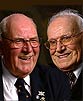
After an extremely moving broadcast we were joined by Gordon Highlander William Young and Chindit Stanley Rothney who were happy to answer questions from viewers. Our first question was from Pete: Did you volunteer for the Chindits Stanley? Stanley: No, I arrived in India as a member of the KOSB (King's Own Scottish Borderers) to a place called Deolali reinforement camp as Windgate came out from the first operation and was going back in on a bigger scale. I was posted to the 1st battalion Cameronians. The question of volunteering didn't seem to exist. It was a case of you, you and you! Question from davidrossyoung: William, how many men were in your platoon and how many returned? William: I could tell you
very few... there were 30 or 40 to start with and very few returned. Question_from cooljaff: In your time in the POW camps were all of the Japs brutal or were some more compassionate? William: I never met any compassionate ones. Question from Michael: What was coping with extreme heat like? Stanley: Extreme heat and the jungle.? One has to be aware that jungle has forest - it has a canopy that is not impenetrable. The sun just doesn't penetrate so you're always in the shade . William: I went in 1937 and it took 6 months to get acclimatised. After that there was no problem. Question from keirry: Thanks to Bill and Stanley for talking about their memories. I'm keen to know how they adjusted to life in civvies street when they were demobbed? Our household was in tears watching the programme. Stanley: Quite a long time had lapsed. After the surrender we went on the HMS Colossus to Singapore. The period of time was such that the war was well behind you. It was towards the end of 46 before I was back in Blighty so I had no problem adjusting. William: It was very hard for me. I had been away for nearly 10 years. Three and a half years as a prisoner. My mind was blank. I had an Aunt who came to see me and I had no idea who she was. It took me some time to recognise her. I wasn't able to sleep in a bed and took to sleeping on the floor. I couldn't even wear shoes as I had been on bare feet for such a long time. It was strange to have soft carpets to walk about on. Question from baresark: Thanks very much for tonight's programme, I found it deeply moving. I just wanted to say that you guys are real heroes and a true inspiration. I was just wondered if when you look around at the world now do you think it was worth all the suffering that your generation endured?
Stanley: I would say yes, if our country was under the rule of German and Japanese we would have been reduced to slaves. Personally I don't feel that I gave something needlessly, I feel my contribution was well worth the effort. William: I don't know. There's still war going on, no peace. The only peace I recollect is between the 2 world wars. Since then there's been war, war, war. Question from alexa: Do you think the price that you and the people who fought over there paid, is mainly forgotten nowadays? Stanley: Up until very recently I would have said yes but in recent times there has been a focus on what is meant by freedom and the fact that it doesn't come cheap and what we have today has been paid for by the lives that were lost and by the likes of Willie and myself. It is sad to see youth in the street playing with skateboards at an age where I was fighting the Japanese. William: I think it has been largely forgotten. It makes you feel sad, the way things are going
it's not good. There's no part of the world that there isn't some kind of fighting in. Comment from john_of_arc: Stanley and Bill,,, we are free people because of ur generation and i thank you for that. Question from sheana: 60 years on from the dropping of the A bombs on Japan, what are your opinions on those events? Do you feel that it was necessary?
Stanley: It was a complete revelation to me. It hadn't entered the English language.
Over the years I am satisfied that it was justified. It did save more lives than it obliterated and we're here today because of that bomb. William: I completely agree with Stanley. I wouldn't have been here today if it hadn't been for the Americans. The Japanese would have fought to the last man so it saved thousands and thousands. Comment_from Danny1: Sirs, I don't have a question for you. I just wish to say a sincere and heartfelt thank you to you and all of those who made the ultimate sacrifice for me that I may enjoy the freedom that we have today. Question from Gerard: Thank you form the bottom of my heart - do you think it would be useful to have veterans speak to school kids to open their eyes to what it takes to provide freedom? William: Yes I think so they are very vulnerable. Someone with experience they'll listen to. Stanley: I have actually participated in this way. I've already spoken to school children. I'm a member of the Bhurma Star and Lord Slim himself at the AGM said that if we were asked to talk to school children it was important we do it. Question from JH: What did you think of Lord Mountbatten? Stanley: He was something special. He had the aura of a film star but was a true leader of men and had the ability to communicate with and spread confidence and to gather many experts round him. Cometh the Hour, Cometh the Man! Comment from choy: My father was also a POW, he was with Lanarkshire Yeomanry (Andy Coogan). He has very clear memories of being transported in the Lisbon Maru - and also on release the plane he missed in the confusion at Okinowa to Manilla crashed with all men lost. Question from JH: Bill, What was your attitude toward Lt General Percival your commanding officer in Singapore ? William: I was his driver. He was a quiet man. He was in a difficult position you see. Singapore was doomed and he was Commander in Chief. Question from Gerard: What was the hardest thing you had to endure? William: Seeing your colleagues being beaten up and not being able to anything. I did on 2 occasions hit the Japanese but I got badly beaten for it. I was fiery person. Comment from Baldragon: Hello William and Stanley. I don't want to ask a question particularly, I'm still completely overcome by the accounts that you brave men have given during the programme. I feel so proud and extremely humbled and just want to say 'thank you, thank you very much!' We must never forget the sacrifices made for our freedom and that evil still exists in this world! Peter Taylor, age 49 Dundee. Question from baresark: Do you think your generation is only now coming to terms with what happened during WW2? William: I don't think they are. Stanley: I agree. I would never have a Japanese motor car! Question from Danny1: Stanley, was Wingate a great leader, or was he a maverick? Stanley: He was without a doubt a great leader. Without him the war in Burma would never have gone the way it did. He mastered the jungle but his technique was based on biblical readings. He was unusual - influenced by the Bible and he was no bloody fool. Question from sheana: Thank you for answering my earlier question, have either of you been back to the Far East since the war? William: Yes, I went back on the 50th anniversary with my two daughters. We went to Thailand and Singapore and we visited the big, large cemeteries in Chungkai. We took photos of Gordon Highlander graves. It was a very moving experience. I met Rod Beattie who featured in the programme. Stanley: No, I was in North Burma. It has been organised, but I haven't been back - at my age there's an increased possibility of picking up bugs. Question from feathers: Are you proud of being a Chindit? Stanley: I recall vividly Wingate addressing us and saying, one day you will be proud. And today looking back I am extremely proud! Question from Sorley: Were you able to talk about your experiences when you came home? William: No. I never talked about it
except at a reunion - no-one else would have believed you. I didn't want to talk to my family about it
Stanley: Not the nitty gritty. People just wouldn't understand what things like long range penetration meant. Your family were just so glad to see you home in one piece.
LINKS
More WW2 memories here on Scotland on Film...
Recollections of evacuees
Air Raid Shelters
On This Day -VJ Day celebrations | 




