Pancake Day in Scotland
By Adam Spencer
The Scottish poet Robert Burns described his native land as a 'Land o' Cakes'. In days gone by, people were expected to give up eggs, oil, dairy products, and other 'luxuries' during Lent. The tradition of making pancakes was designed to use up all the 'forbidden' foods before Lent in order to avoid spoiling and waste.
A pancake was a 'cake' cooked on a heated flat-surface; historically a bakestone, hearthstone or griddle, and eventually a pan. Scotch pancakes are also known as 'drop' or 'dropped scones', because soft dollops of mixture are dropped onto the cooking surface. Scones originated in Scotland, and the 'Scotch pancake' is one of its many forms. They are different to the traditional British 'crepe' because they are thicker and slightly risen.
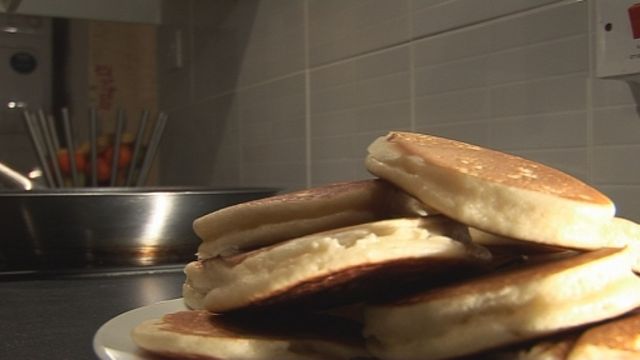
Scotch pancake recipe
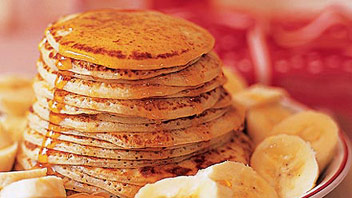
Scotch pancakes with banana and maple syrup
Ingredients
- 100g/4oz self-raising flour
- A pinch of salt
- 50g/2oz caster sugar
- 1 free-range egg
- 4 tbsp milk
Preparation method
1. Place all the batter ingredients into a mixing bowl and whisk together.
2. Heat a non-stick frying pan over a medium heat and brush the pan with a little oil.
3. Add large spoonfuls of the pancake mix to the heated pan and cook for 1-2 minutes until small bubbles appear on the surface, then turn over and cook for another 1-2 minutes, until lightly golden.
4. Transfer the pancakes onto a serving plate and add the topping of your choice.
Batter late than never
This festive feast is always 47 days before Easter Sunday, a moveable celebration based on the cycles of the moon. Pancake Day can vary from as early as 3 February to as late as 9 March.
Pancake Day is a term used in the United Kingdom for Shrove Tuesday. This is the Tuesday before Lent on Ash Wednesday. It is a day of penitence, to clean the soul, and the last chance to feast before Lent begins.