

BBC HomeExplore the BBC
This page has been archived and is no longer updated. Find out more about page archiving.

16 October 2014
South Africa

BBC Homepage
Scotland

Education Scotland

South Africa

Political Issues
ยป

Constitution
Bill of rights
Constitutonal Court
Structure
Traditional leaders
Local Govt
Provincial Govt
National Govt
Cabinet

About the site
Sitemap


Contact Us

Cape Town - the jewel in the crown

capetown The death of the New National Party and its absorption by the ANC saw the end of a long and vicious struggle for control for Cape Town, the most glamorous and international of South African cities.

Cape Town has always been regarded as a rebel city by the ANC and for many years was the only major city it did not control. Unlike most urban areas in South Africa, only a minority of the citizens (33%) are black Africans. Most Capetonians are coloured (45%) and there's also a large white population (20%).

For many years the New National Party held on to power in Cape Town by playing on the fears of the coloured population that the ANC would discriminate against them in favour of Africans. Gradually, however, the delivery of the ANC's transformation programme - water, electricity, roads, health clinics and schools - has brought more and more coloured voters into the ANC camp.




For the last two years the ANC has been sharing power with the NNP, squeezing out the Democratic Alliance. The DA won the local elections in 2000 but lost its majority when its alliance with the NNP fell apart. Polls suggest that the ANC will win the 2005 local elections outright.


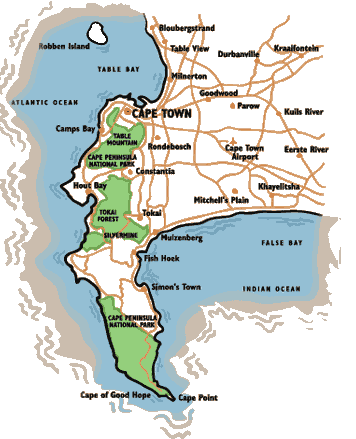
The new council has a lot of work to do. Cape Town is one of the most divided cities in South Africa with huge gaps between rich and poor. To make matters worse, the city has had a huge influx of settlers from poorer parts of the country, creating an urban sprawl of illegal settlements without running water or sewage disposal. The Council has to build houses for the growing non-white population, transform poverty stricken townships such as Khayelitsha, supply water and electricity and schools to its poorest residents and deal with the growing scandal of street children who are vulnerable to exploitation and abuse.


In order to deliver water, sanitation and electricity to its residents, Cape Town Unicity is turning to the private sector. The Council argues that private companies have the skills and resources to provide services quickly. Trade Unions and some Council managers do not agree. And when the water and electricity bills arrive, some poor residents refuse to pay.


However, the Council does not have time to waste. Cape Town is already a tourist Mecca, attracting an estimated 20 million visitors to its historic waterfront each year. The Football World Cup is coming to South Africa in 2010 and Cape Town will be many visitors' prime destination. It has to have a good public transport system and its main services in place. The Council is determined that Cape Town be an example to the rest of Africa and that it will stand comparison with the worlds greatest cities. It has only a few years to complete the job.


About the BBC | Help | Terms of Use | Privacy & Cookies Policy