
National Trustee's Overview
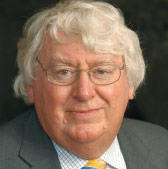
Jeremy Peat,
BBC National Trustee for Scotland
This review assesses BBC services for audiences in Scotland and reports to licence payers on the activities of the Audience Council for Scotland, established in January 2007 to reflect the views of licence payers in Scotland to the BBC's governing body, the BBC Trust.
The first full year under the new governance arrangements has been challenging for both the BBC and for the Trust. The Audience Council believes that the BBC, and BBC Scotland, delivered strongly for audiences in Scotland in supporting citizenship, learning and creativity, representing the UK and its nations, and to ensure licence payers reap the benefits of new technology.
From Scotland's Music with Phil Cunningham to broadband coverage of the SPL and the new Radio Scotland Zones, services from BBC Scotland evolved to meet the needs of contemporary Scotland. Coverage of politics, and in particular the elections in May 2007, continued to set very high standards on radio and television, and online.
The Trust focussed on issues which matter to audiences in Scotland, authorising the launch of new services and holding the Executive to account for the performance of existing ones. Members of the Audience Council worked hard to gather and reflect upon audience views, and to transmit them to the Trust.
BBC Scotland opened one of Europe's most advanced broadcasting centres in Glasgow in September, while the digital technology it houses is now deployed in all BBC centres across Scotland. This will bring benefits for audiences, and for the wider creative sector in Scotland, for many years to come.
New services approved by the BBC Trust during the year will bring benefits for Scotland. A High Definition TV channel was approved in November. A proposal for a Gaelic digital service, to be run in conjunction with the Gaelic Media Service, was rigorously tested last summer and a wide range of views was heard from across Scotland and the UK. The process led to a strengthened proposition, approved in January 2008, which I am confident will enrich the BBC offering for Gaelic and English speaking audiences alike. Before digital switchover takes place in north and central Scotland in 2010, the Trust will consider whether the service should be available on DTT as well as satellite, cable and broadband.
Two services previously approved by the Trust are already delivering audience benefits. The BBC iPlayer catch-up service has proved highly successful, while the free-to-air satellite service Freesat, launched with other broadcasters, restores near-universal availability of the full range of BBC television throughout Scotland.
On two major issues highlighted by the Audience Council at its inception, the Trust took decisive action during the year. A framework has now been set for a substantial and sustainable increase in the number of network commissions from Scotland. The Nations' Impartiality Review, led by Professor Anthony King and considered by the Trust in Glasgow in May, concluded that the BBC needs to improve its coverage of events and developments in the different UK nations and regions. The response from the BBC Executive is likely to mark a sea-change in the coverage of Scottish affairs on the BBC networks.
Progress on both these issues will be closely monitored by the Trust and the Audience Council. You will find details of these and other priorities in this document. In the year ahead, the Council will continue to identify the interests of audiences in Scotland and bring them to the attention of the Trust.
These issues, and others, played an important part in the wider debate which followed the establishment of the Scottish Broadcasting Commission in August 2007. The BBC and the wider ecology of public service broadcasting are interdependent; the Trust and the Audience Council will continue to engage fully with the Commission, regulators, industry and audience groups to ensure that the interests of licence payers in Scotland are properly represented.
BBC iD
BBC iDBBC navigation
BBC links

BBC © 2014The BBC is not responsible for the content of external sites. Read more.
This page is best viewed in an up-to-date web browser with style sheets (CSS) enabled. While you will be able to view the content of this page in your current browser, you will not be able to get the full visual experience. Please consider upgrading your browser software or enabling style sheets (CSS) if you are able to do so.
