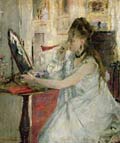
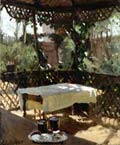
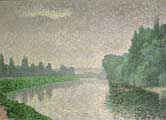
Impressionist paintings often appear on mugs, calendars and posters. However, they weren't always so socially acceptable. Impressionist painters were initially criticized for attempting to capture the fleeting effects of light and colour found in nature. Using daubs of pure colour, they painted landscapes, sunlight reflecting on water and flowers and rejected the traditional subjects and darker colours advocated by their teachers. Claude Monet founded Impressionism in Paris during the 1870s and painted for more than 60 years. One of his works, 'Impression: Sunrise,' gave the style its name. Monet once said: "For me, a landscape does not exist in its own right, since its appearance changes at every moment... It is only the surrounding atmosphere which gives subjects their true value." If you like Impressionism, you might also like: -
Neo-Impressionism – Artists eventually reacted against the spontaneity of Impressionism and used scientific theories of light and colour to create carefully planned compositions.
Artists: Georges Seurat, Paul Signac and Henri-Edmond Cross
- Fauvism – The French artist Henri Matisse founded this short-lived artistic movement. Fauvists used pure colour, often squeezed straight from paint tubes.
Other artists: André Derain and Maurice de Vlaminck
- Japanese ukiyo-e – Ukiyo-e are woodblock prints that usually show scenes from everyday life. The Impressionists were inspired by the Japanese artists’ use of colour.
Artists: Toyohara Chikanobu, Katsushika Hokusai and Utagawa Kunisada
Return to art styles homepage |