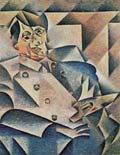
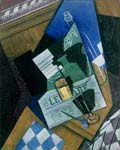
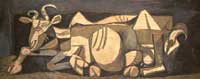
Looking at a cubist painting is a bit like gazing into a shattered mirror – the image is fragmented and you can see it from different angles. Pablo Picasso and Georges Braque invented Cubism between 1907 and 1914 and, in the process, threw out the painting 'rulebook'. They were chiefly inspired by the French Post-Impressionist painter Paul Cézanne, who once said that "nature should be treated as cylinders and cones". Picasso and Braque created pictures with fractured perspective that didn't imitate nature. Picasso once said: "There are painters who transform the sun into a yellow spot, but there are others who, thanks to their art and intelligence, transform a yellow spot into the sun." If you like Cubism, you might also like: - Abstract art – Abstract painters used shapes, lines and colour to express their inner thoughts and emotions without showing recognizable objects or figures.
Artists: Wassily Kandinsky, Robert Delaunay and Kazimir Malevich
- Fauvism – The French artist Henri Matisse founded this short-lived artistic movement. Fauvists used pure colour, often squeezed straight from paint tubes.
Other artists: André Derain and Maurice de Vlaminck
- Futurism – The Italian Futurists admired technology and danger and scorned artistic tradition. Their paintings showed cars, trains and planes in action.
Futurist painters: Umberto Boccioni, Luigi Russolo and Giacomo Balla
Return to art styles homepage |