

Soldier Record
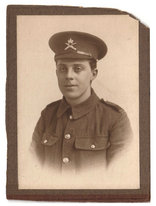
Taylor Gibson
Contributed by: Nigel Gibson, on 2008-11-04
| Rank | |
|---|---|
| First Name | Taylor |
| Surname | Gibson |
| Year of Birth | 1895 |
| Year of Death | 1978 |
| Regiment | Royal Northumberland Fusiliers |
| Place of Wartime Residence | Seaton Delaval, Northumberland |
Taylor's Story
A lot if not all of rememberance is rightly given to those who fell in defence of their country and we rarely consider those who lived to fight another day. You could say that my grandfather's story is exactly that, a story of luck, survival and contribution to his country in a most unusual way.
He volunteered in 1914 for the Northumberland Fusiliers from his village of Seaton Delaval, a mining community where he was training to be a mining engineer he went through his basic training and was about to be sent to the Western Front when he was seconded to Rolls-Royce aero engines in Derby. He spent his war quality checking engines for the RFC and RNAS, at the end of the war he stayed with Royces and his career developed in such a way that he ended up becoming one of their first technical field representatives working on some of the most critical design projects that would help win us the next war, namely the development of the Merlin engine amongst many others.
He was also the the Rolls-Royce technician in charge of the Spitfire and Hurricane prototypes first flights as well as the Fairey Battle and the many inter-war types particularly the Hawker Hart, Hector and Fury as well as the Schnieder Trophy-winning Supermarine S6B, the aircraft designed by Reginald Mitchell who would develop the Spitfire on the information gained on S6B airframe and Rolls-Royce engine combination. So for Ted surviving the Great War enabled him to make a major contribution to help us win the next, which saw him and his two sons all working for the war effort at Royces and he was a Major in the Notts and Derby Sherwood Foresters during that one as well.


No additional memories have been submitted