

Soldier Record
David Thomas
Contributed by: Louise Thomas, on 2009-01-02
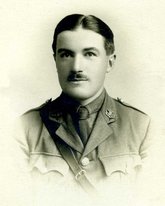
| Rank | |
|---|---|
| First Name | David |
| Surname | Thomas |
| Year of Birth | 1887 |
| Year of Death | 1967 |
| Regiment | Welch Regiment |
| Place of Wartime Residence | Llandeilo, Carmarthenshire |
David's Story
My grandfather, David Thomas, joined the Welch Regiment in Llandeilo in 1914, and was sent to Gallipoli in July/August 1915 in a group of reserve officers to replace casualties. On arrival at Suvla Bay he constructed a cwtch (dugout) on the cliff slope, covering it with ground sheets. It was, he later wrote, 'quite habitable until the rain storms and blizzards came in November... such rain as we had never before experienced'. This dugout was abandoned when it became flooded, and he was 'detailed to take over a section ranging from 90 to 200 yards away from the enemy. It was fairly quiet when we were there and we did not suffer many casualties, not even when our section was concentrated on by the artillery. Our casualties were mostly from trench fever, jaundice and paratyphoid. Jaundice was infectious and claimed most of the victims. We had to keep well under cover as the enemy's snipers were very active, especially from opposite my dugout, which was a few yards behind the front trench and therefore exposed to fire from a tree just by the enemy trench opposite.
'I shall never forget the glories of a hot bath and a comfortable bed on board that hospital ship'
'One fine sunny afternoon I was resting in the dugout and just by the entrance was my orderly cleaning a little of the mud off my wellingtons and so on, whistling away while I dozed a little. I had warned him regarding the sniper who had often potted at us if we showed ourselves for a second at that spot and I repeated the warning. The next thing I heard was the thud of a rifle bullet on the earth by the entrance. I warned him again and immediately he took cover and I dozed off only to be wakened up by a cry - my faithful one had been shot right through the bottom part of his nose, in one side and out the other.'
In December my grandfather's battalion was evacuated to Egypt, but instead of joining them he was taken to Southampton on board a hospital ship, suffering from paratyphoid and jaundice. 'I shall never forget the glories of a hot bath and a comfortable bed on board that hospital ship, and the strangeness and feeling of security engendered by the fact of being in a room once more, protected from the elements, and away from the horrible stench and the sea of mud on which we had lain down, had walked and had slithered about on.
'I was taken to Endsleigh Place Hospital just off Euston Road, where I was a patient for six weeks. We were well treated, and presently were taken for runs round London and the suburbs in luxurious cars supplied by the nobility. The Duchess of Buccleugh (cousin of the King) was one, and she also gave us tickets for her box at the Albert Hall.'
My grandfather spent the rest of the war in England, and happily was able to choose 'an engagement ring for my sweetheart thus making official and public what had for a few years been a private understanding'. He was promoted to Captain, was in charge of demobilisation after the armistice, and 'had the pleasure of demobilising myself in January 1919. Strange to relate, my son Wynne [my father] finished up in the Second World War with the same rank and appointment'.


No additional memories have been submitted