

Soldier Record
Albert Edwards
Contributed by: Martin Edwards, on 2008-11-19
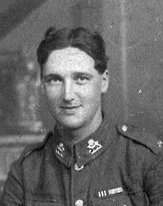
| Rank | |
|---|---|
| First Name | Albert |
| Surname | Edwards |
| Year of Birth | 1895 |
| Year of Death | 1937 |
| Regiment | York and Lancaster Regiment |
| Place of Wartime Residence | Rotherham, South Yorkshire |
Albert's Story
I often wondered how my grandfather found the will to fight on from the day he enlisted in 1914 right through to the bitter end.
Wounded by gunfire on the Somme, gassed near Ypres - causing lung damage that led to his untimely death at the age of 42 - he still found the will to be on the front line in Italy winning the military medal for a second time, only days before it all ended.
That was on October 31 1918. Ninety years to the day later, I found the reason - or perhaps two.
Family anecdotes have referred to an uncle Ernest who died in WW1, and how, as he waited for the train to take him back from leave in his home town of Rotherham, he became filled with a terrible foreboding. He was so sure that this time he would never return that he asked his uncle to trap his hand in the door of the carriage in the hope that a serious injury would prevent his return to the front. His uncle refused. Ernest never came home.
Back to the present time and I search the internet. On the Commonwealth War Graves site there is Ernest Edwards, aged 25, killed on 9 August 1917 near a Belgian seaside town at the northern extreme of the battle of Passchendaele.
In the same battalion was his younger brother by three years Albert, my grandfather. We will never know how Ernest died, though battalion war diaries of the time casually refer to the unit "losing ten men a day to gas or shelling". We will never know whether Albert was with him when he died.
What we do know is that his brother found the will to go on. He went on despite having the pay he sent home to his mother stopped for losing his gas mask - this to a man who earned his first military medal in 1915 for heroism in a gas attack that ultimately cost him his life.
On the Italian front in those last days of the war, he performed with such gallantry that the Italians also bestowed upon him their highest honour, the Croce di Guerra. Did he do it for his country? Perhaps. But above all, he did it for his brother.
And for someone else. In the family scrapbook is a little postcard, a memento of the kind soldiers would buy for a few pennies. Entitled "a soldier's letter to his sweetheart" it bears a printed patriotic jingle about how he proudly answered his homeland's call for more soldiers. It was sent to my grandmother Jane in 1915, and she kept it until the day she died. It ends with the hope of a "peaceful future, full of joy".
Married in May 1919, they could never have imagined how short that future together was to be. Nor that their only son, my father, would have to go back and do it all again, in Normandy in 1944.


No additional memories have been submitted