

Soldier Record
William Clark Cooley
Contributed by: Anida Rayfield, on 2008-11-16
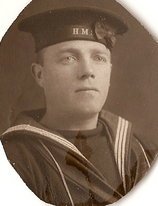
| Rank | |
|---|---|
| First Name | William Clark |
| Surname | Cooley |
| Year of Birth | 1887 |
| Year of Death | 1918 |
| Regiment | Royal Navy |
| Place of Wartime Residence | Portsmouth, Hampshire |
William Clark's Story
William Clark Cooley was the eldest son of eight children. His two brothers had both joined the army as regular soldiers, however, William chose the sea and joined as a St Vincent boy in 1903. William served in several ships and early in the war he was promoted to Leading Seaman. He transferred to the navy's newest ship HMS Canada in August 1915 and saw service in her at the Battle of Jutland. During this time he was again promoted to Petty Officer and in June 1917 he made a decision to join the then fledgling submarine service. He reported to HMS Dolphin for training on 26th June and by the 27th September he was in Rosyth with the submarine fleet.
Living conditions for the submariners were very poor and the wife of the Admiral of the Fleet Lord Beatty gave them a reading room where there could assemble out of the confining, claustrophic atmosphere of the submarines.
William was assigned to K17, the K class submarines were poorly designed and much to the astonishment of those who saw them for the first time had funnels which had to be broken down and stowed before the submarine could dive. Their turning circle was huge and their manoeurevability was therefore very poor.
William was allowed some leave at the end of December 1917 to enable to him to go to Newcastle on Tyne where he married his sweetheart Marcia. He immediately returned to base and on the night of the 31st of January just a few short weeks after his marriage the flotilla received orders to carry out a training exercise. The standing order was that in daylight hours submarines should form up at the rear of the flotilla, however, at night they would lead the destroyers. So it was therefore that they were making their way at the head of the fleet when two small ships crossed their path. In the darkness confusion reigned when, as they attempted to take avoiding action, one of the submarines rudder jammed and was unable to move away from the ships coming up behind them. K17 was rammed and severely damaged, the men abandoned ship, jumping into the black waters in their heavy woollen kit. Another ship came alongside and as she was giving assistance to the men in the water the remaining sailors were mown down by HMS Fearless and drowned before they could be pulled to safety. Only nine men survived, one dying of exposure shortly afterwards, William Clark Cooley was not amongst the survivors and for him the war was tragically brought to a close, not at the hands of the Germans but by his own compatriots.
A story of loyal service with a tragic ending.
We will remember them.


No additional memories have been submitted