

Soldier Record
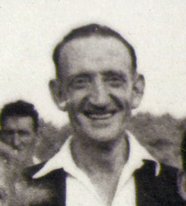
William Dixon
Contributed by: Vanessa L. Dixon, on 2009-09-06
| Rank | |
|---|---|
| First Name | William |
| Surname | Dixon |
| Year of Birth | 1899 |
| Year of Death | 1950 |
| Regiment | South Wales Borderers |
| Place of Wartime Residence | Ashton under Lyne, Lancashire |
William's Story
William Dixon was my grandfather. He enlisted in the 5th Battalion, South Wales Borderers at Ashton under Lyne on 19th March 1917, his 18th birthday. The 5th was known as a Pioneer Battalion, they were responsible for digging the trenches and laying the wires, as a collier he would have been invaluable to them.
His skills as a collier were invaluable to the Pioneers
The 5th was heavily employed in the summer and autumn of 1917, during the struggles of the Third Battle of Ypres, and at Passchendael, when the work of the Pioneers in the shell-stricken area became of first importance.
In the great German attack of March 1918, the Battalion was in the Third Army upon which fell a great part of the assault. The battalion fought a memorable action, inflicting heavy losses on the enemy by determined counter-attacks and withdrawing steadily to positions, which it had dug during the preceding days. The Germans were checked in the evening at a cost to the battalion of 150 casualties. Next day the rearguard fighting continued, the battalion making stand after stand and fighting most resolutely.
This was the first occasion on which the battalion had fought as infantry, and they had shown that they could march and shoot as well as dig and wire.
With the 6th Battalion, the 5th took part in stemming the great German attack on the River Aisne in May and June 1918, and added the Battle Honour 'Aisne, 1918' to those already won. It served the rest of the war in France and took part in the victorious advance of 1918.
While still in France he re-enlisted on 1 February 1919, joining the 2nd Bn. During his service in India he gained a promotion to Lance-Corporal and was discharged to the reserve in 1922, and finally discharged from the army in 1931. After his discharge in 1922 he returned to being a collier and was a member of the rescue team.


No additional memories have been submitted