

Soldier Record
Thomas Gardner
Contributed by: K14submariner, on 2008-11-11
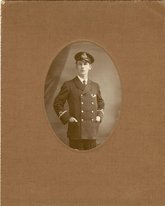
| Rank | |
|---|---|
| First Name | Thomas |
| Surname | Gardner |
| Year of Birth | 1889 |
| Year of Death | 1928 |
| Regiment | Royal Navy |
| Place of Wartime Residence | Portsmouth, Hampshire |
Thomas's Story
My earliest memory of my father was a full length very large photo of him in full dress Naval uniform with sword, cocked hat and medals. Probably taken when he received the D.S.C. I never met him as he died before I was born.
He joined a R.N.School in Portsmouth when he was 12yrs old.
In 1904 he became a Boy Artificer.
On the 29thOctober 1914 he joined the submarine service as acting mate[engineer].
From December 1915 to March 1917 he served on 'J' Class submarines first J5 and then J3.
In March 1917 he transferred to the K14 as an Engr Lt.
The K Boats were a new type of submarine which used a steam fired boiler when on the surface. When they dived they closed the hatches and switched to battery power. There were many accidents.
During The Battle of May Island [a naval exercise in January 1918] my father was on the K14 when in the dark she was hit by another K Boat. Immobalised and likely to sink at any moment the men on the bridge and upper deck watched unable to do anything as battle cruisers and destroyers swept by on either side. They stayed there for over two hours whilst in the mayhem two K Boats were sunk and more than fifty men drowned.
It was dawn before the K14 was eventually towed into Rosyth.
My father gave evidence at the resulting enquiry which blamed the officers concerned not the Admiralty's improper use of K Boats as fleet submarines.
The officers quarters were situated over the batteries. Whilst my father was serving on the K14 there was a leak from the batteries and he suffered damage to his lungs which contributed to his medical discharge in 1922.
He served on the K14 until she was paid off in March 1918.
Before leaving the Royal Navy, Engineer Lt Thomas Gardner saw service in the Caspian Sea and was awarded The Distinguished Service Cross.
He unfortunately suffered severe post traumatic stress then called 'neurasthemia'.


No additional memories have been submitted