

Soldier Record
William Graham Chorltom
Contributed by: Ruth Woodward, on 2008-11-09
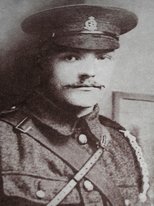
| Rank | |
|---|---|
| First Name | William Graham |
| Surname | Chorltom |
| Year of Birth | 1892 |
| Year of Death | 1963 |
| Regiment | Royal Army Medical Corps |
| Place of Wartime Residence | Stoke On Trent, Staffordshire |
William Graham's Story
William joined up at Holborn Hall, London on 28th February 1915. He was assigned to the RAMC, York. His regimental number was 57115. He was then 23 years of age. He lived at Shoe Lane, Holborn but was a Staffordshire man. Apparently he ran away from home but we don't know when or why.
The following information comes from his Army medical records:
He was in Egypt on August 25th 1915 before going out to Gallipoli. On Dec 24th 1915 he was invalided to England from Moudros(Island of Lemnos) on the Aquitania.
April 19th - 22nd May 1916 he had paratyphoid.
My father told me that William was at the Battle of the Somme.
He married Ida Platt of Wood Lane, Newcastle Under Lyme, Staffordshire on June 8th 1916.
On March 19th 1917 he embarked at Southhampton for Le Havre. He joined his base detail at Rouen on October 10th 1917. He was posted to the 24th Home Counties Field Ambulance on 16th October 1917.
On the 29th October 1917 the record states he had neurasthemia(shell shock). It speaks of "marked spasmodic movements of the head and arms extending to the legs. Pupils normal, voice normal. Whilst walking from Pheasant trench to Bolow Farm a shell hit a shell dump which Private Chorlton was passing at the time and blew it up wounding several men who were with Pte Chorlton. He was lucky enough to escape unhurt except for the shock of seeing all his comrades wounded around him. Disposal: To duty - 25/11/1917"
On October 10th, 1918 he was transferred to the Royal Engineers as a tunnelling boy.
He talked very little about the war upon his return but I'm told he returned "a different man". There were one or two memories he shared:
He spoke of having been awake for 3 days and nights, knee deep in water in the trenches and being told by officers that if any of the men slept they'd be shot. The officers were in more comfortable conditions. He said he reached the stage where he didn't care if he was shot and dozed off behind a sheet of metal. He hated General Haigh and thought that most of the officers leading them were fools and that anyone with any intelligence could see that they were being ordered straight into gun fire to no end but the death of thousands.
He spoke of marching through Belgium and receiving a cup of tea from the Salvation Army which was the only organization that didn't charge.
His record states that on 21st December 1918 he received a duty order: Return of Coal Miners to the UK. Told to report to the Discharge Centre at Ripon for work in the coal mines.
He received the 1915 star medal, the British medal and the Victory medal. For the remainder of his life he was very deaf.
William was my grandfather.


No additional memories have been submitted