
This article examines the controversial Yasukuni shrine, dedicated to the souls of all those who have fallen in battle for Japan.
Yasukuni
Last updated 2009-09-16
Yasukuni shrine
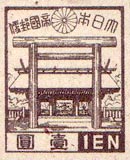 Yasukuni's main gate, depicted on a 1946 postage stamp ©
The most controversial Shinto shrine is at Yasukuni and honours 2.5 million Japanese soldiers, including convicted war criminals such as former Prime Minister Hideki Tojo, who was executed after World War II.
Yasukuni - which means 'peaceful country' - was founded in 1869 under the orders of Emperor Meiji and is dedicated to the souls of all those who have fallen in battle for Japan since that time. Within the shrine the souls of the dead are worshipped rather than just remembered. They are referred to as deities who have sacrificed their lives for the making of modern Japan.
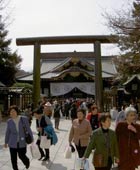 People at Yasukuni on August 15th, 2003, anniversary of Japan's WWII surrender ©
Surrounded by war banners and military regalia, they are venerated by the hundreds of thousands of visitors who attend the shrine each year to pay homage to them.
Controversy over Koizumi's visits
The 2001-2006 Japanese Prime Minister, Junichiro Koizumi, sparked argument after argument when he insisted on visiting the Yasukuni shrine every year.
He refused to offer an explanation or stop visiting the shrine, causing tensions with China and South Korea.
BBC iD
BBC iDBBC navigation
BBC links

BBC © 2014The BBC is not responsible for the content of external sites. Read more.
This page is best viewed in an up-to-date web browser with style sheets (CSS) enabled. While you will be able to view the content of this page in your current browser, you will not be able to get the full visual experience. Please consider upgrading your browser software or enabling style sheets (CSS) if you are able to do so.

