
Neuroscientist Dorothy Rowe explains how the mental world created by our brains produces what we call free will.
Dorothy Rowe: What it is to be a human being
By Dorothy RoweLast updated 2009-10-22
Dorothy Rowe
Dorothy Rowe is a world renowned psychologist and writer whose work has included such areas as emotional distress, happiness, growing old, religious belief, politics, money, friends and enemies, extraverts and introverts, parents, children and siblings.
What it is to be a human being
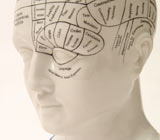 Photo: Scot Spencer ©
"Neuroscience proves the existence of free will" would be an extraordinary media headline, and, perhaps even more extraordinary, it would be true.
What neuroscientists have shown is that we are free to make choices about how we interpret events. It is our interpretations of events, and not the events themselves, that determine what we do.
Research by neuroscientists has revealed that the way our brains have been constructed means that we do not see reality directly but only the images or interpretations that our brain has created.
As the neuroscientist Chris Frith says in his excellent book Making up the Mind: How the Brain Creates Our Mental World (Blackwell), "Even if all our senses are intact and our brain functioning normally, we do not have direct access to the physical world. It may feel as if we have direct access, but this is an illusion created by our brain." Our brain creates these images and interpretations out of our past experience, that is, the memories which are stored in our brain.
Since no two people ever have exactly the same experience, no two people ever interpret anything in exactly the same way. If our brains did not operate in this way and we saw the world directly as it is, we would be looking at a world that bore some resemblance to the universe that the physicists try to describe, but we would have to be as small as a nuclear particle to see it.
Every species lives in a world appropriate to the size of the species. Our brain creates a human-sized world, an elephant's brain an elephant-sized world, and an ant's brain an ant-sized world. In the universe we live in, everything is connected to everything else, but our brain creates patterns and divisions that do not actually exist.
People's interpretations can vary greatly, not just in meaning but in the degree they relate to what is actually going on. Some people try to create interpretations that are as close to the truth as they can make them. In scientific terms, these interpretations have a high degree of validity. Some people create interpretations that are based solely on their fantasies, and any relationship to the truth is accidental. Most of us operate somewhere between these two extremes.
Whether our interpretations are close to the truth or not, they are guesses about what is going on. We all operate as scientists do, creating hypotheses and then testing them. When you are waiting to cross a busy road, you create a theory about the speed of the traffic. If your theory is a close approximation of what is actually happening, you will cross the road safely: if it isn't, you won't.
We might not be able to control most of the events in our life but we are always free to choose how we interpret those events. Every event has at least two possible interpretations, namely, it is and it is not. We often feel that an action is not the result of a choice - we say, "I did that instinctively" - but here the work of choosing an interpretation and making a decision has gone on unconsciously. Only the outcome is conscious.
Most of what goes on in our mind/brain is unconscious, but, conscious or not, choosing an interpretation is the exercise of our free will. The ability to interpret events, that is, create meaning, and to choose between alternative meanings arise out of the way our body and brain function. Creating meaning is one of the systems whereby our body/brain/mind operates.
However, the range of meanings we can choose from is limited by how much we have learned in our life. This is why being a child is so difficult. This is why organisations that want to have power over us, like the State, the Church, and Big Business, try to control what we know. The less we know, the less choice we have. This is also why the BBC must be cherished and protected, and its high standard of truth-telling maintained, no matter what the contingencies of the moment may be. We need those who inform us to give us the best version of the truth they can find, while all the time acknowledging that the best they can provide is an approximate truth.
To claim to be in possession of an absolute truth is to claim the impossible because all we can possess is our interpretation of what we have experienced or been told. If God made us, then this is how He made us. One of the consequences of this is that there are as many forms of Christianity as there are people who call themselves Christian. The same can be said of every religion.
A great many people interpret what they have been taught by their religious leaders in ways that cause them and/or others considerable pain and suffering. Some people interpret ideas such as the Christian belief that we are born in sin and therefore must seek salvation to mean that they are intrinsically bad and must live their life striving to meet the highest standards of goodness, but always being in fear of failing and being punished. This kind of interpretation leads to misery, despair, and depression.
Many people believe that, because they hold certain ideas, they are morally superior to those who do not hold these ideas. In believing this they commit the deadliest of the deadly sins, namely pride, but they do this willingly because they believe that their moral superiority entitles them to patronise, proselytise, and, under certain conditions, maim and kill those they despise.
The way our brain functions means that we are constantly choosing which interpretation we will give to every event. From each interpretation come our decisions about how to act. However, our freedom of choice has the consequence that we cannot avoid the two necessary conditions of choice. Choices exist only in a state of uncertainty, and we are responsible for our choices.
When people fear uncertainty and dislike taking responsibility for what they do, they create for themselves the illusion of certainty and irresponsibility by choosing to be a child who is obedient to a god or to a political leader. In doing this they refuse to accept their very nature, that is, what it is to be a human being.
Around the BBC
BBC iD
BBC iDBBC navigation
BBC links

BBC © 2014The BBC is not responsible for the content of external sites. Read more.
This page is best viewed in an up-to-date web browser with style sheets (CSS) enabled. While you will be able to view the content of this page in your current browser, you will not be able to get the full visual experience. Please consider upgrading your browser software or enabling style sheets (CSS) if you are able to do so.

