Nick Danziger Webchat: Wednesday 11th June 2003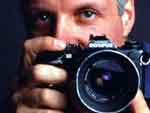
Nick Danziger: Photographer of Today's "Britain at 6am" |
A final word from Nick:
Thanks for the fantastic questions. I cannot begin to tell you how this type of communciation makes it all worthwhile and rewarding to know that others are interested in what I'm doing. It gives me the inspiration to go off to some very difficult places to bring back something of what other people are forced to live through. They are the real heroes.
I hope to meet you all again here at the end of the 13 weeks, when you'll have seen all the pictures. (or maybe you'll no longer want to speak to me!!)
Very best wishes, Nick.
Name: NinaQuestion:
If given the chance - who or what would you most like to photograph
Answer: Very good question Nina!
There are many subjects I would like to photograph. One in particular is the continuing toll of Aids on HIV positive people. It is becoming if not already is a forgotten subject, or considered "old hat" by editors. I also would like to do a long-term project on the effects of war on children. But increasingly, this type of gritty subject is more difficult to get commissioned.
People would rather have pictures of Becks and family at home than the family in for example Zambia dying of HIV/Aids. We have to ask ourselves: is the public leading the media, or is it the other way round?
Name: Bridget WindleQuestion:
What do you think of digital cameras and do you own one?
Answer: I own a digital camera, but I very very rarely use it. I only use it for family photographs. I hope that I will still be able to continue to use traditional film for many years to come. The quality remains superior and different.
For me, the greatest disadvantage of using a digital camera at the moment is the lack of speed between images. With digital cameras you have to wait precious moments before you can take the next picture. Also, when you enlarge a picture to a great size, there is a loss in quality and definition. You are less able to control depth of field and aperture speed than film.
Increasingly, digital cameras will replace traditional film and undoubtedly the quality of digital cameras will steadily improve. Eventually, I imagine, it will be similar to the difference between moving footage - in other words the difference between video tape and celluloid film.
If you're a beginner, you should definitely start with a traditional SLR, because I think it is important to frame your pictures correctly and then study the results later!
Name: Duncan WilliamsonQuestion:
Is is weird or just a sign of the times that a RADIO programme has sponsored a PHOTOGRAPHER to record images of Britain at 6 am?
Answer: I was delighted when the Today programme approached me. I think we should continue to use the different media in new and interesting ways. I have made several TV documentaries using still images and they have been described as radio with pictures. I think that much of the new technology enriches our lives in many ways and undoubtedly that includes the visual and audio domains.
Name: Andrew ButtersQuestion:
Who are your heroes? The photgraphers that have most influenced you.
Answer: Tintin! (the Belgian cartoon character). He was a bigger influence on my life than any photographers. He inspired me to set off on my early adventures. Before being inspired by photographers I was influenced by the writings of John Steinbeck, George Orwell and Jack London.
My first adventures began at the age of 13, when I went to Paris on my own. The interest in photography came about because I want to document the places and people I met on my travels. Increasingly I realised that my travels, although "exotic places", were not exotic for most of the people in those countries. My photography now is very much about how people live their daily lives.
The photographers I admire most are Don McCullin, Jiles Peres, and Sebastial Salgado. But those are just some of the many.
Name: JulianQuestion:
I saw your pictures in the Times a few weeks back of Blair during the war leading up to his 50th birthday. These types of things of fly-on-the-wall things are done to prove how 'normal' the man is. How much access did you have? Did Campbell and all his other minders tell you what you could and could not shoot?
Answer: In the beginning, they didn't know me personally and access was to a certain extent restrictive. Also for reasons of national security. But what I found so extraordinary about the 30 days that I spent with the Prime Minister was that in the end I was allowed to access most if not all of the events that I requested. Not once was I told not to photograph anything, unless and this was the only occasion, there were "spooks" present.
I don't like to gossip - I avoid celebrity photography! - but I must say my impression of him is that he is a very nice bloke. There was nothing that was set up for me to photograph. None of my photographs are posed images. Downing Street had no idea what type of pictures I had taken until the night before publication when the magazine was first available. They had no editorial control whatsoever.
Some of you will remember the photograph being made up before his appearance on a television address to the nation - when have we ever seen a world leader in such intimacy. Maybe if he had known this, they might not have allowed it.
There were 27 pages of pictures and this spread of pictures was meant to represent the key moments of the 30 days prior, during, and after the war.
Name: Gareth SykesQuestion:
You're perhaps best known for your many adventures abroad. Would you say it is easier to travel now than say back in the early 80s when you went to places such as Turkey, Iran and Afghanistan?
Answer: I think that it is a moveable feast as to where it becomes easier or harder to travel. But generally speaking the world becomes increasingly more accessible. But not necessarily less dangerous.
Name: Frances MommertQuestion:
What a wonderful opportunity to tell how I enjoyed your books, particularly your coverage of Afghanistan. Did you go back before or after the recent war? What about all your friends in Kabul and the mountains? How did they fare? Are you able to report on the present frightening developments in Afghanistan?
Answer: I continue to visit Afghanistan. I was there for the fall of the Taliban and have been there recently. It is very sad to say that outside Kabul very little has changed. On a positive note, most of my friends are well and prospering under the Karzai government. It is also now much easier to communicate with my friends there. They even have access to Internet! They could even be reading this webchat - something which could have had them arrested under the Taliban.
Media coverage including photography can have a very positive effect on the lives of individuals in countries such as Iraq and Afghanistan. But sadly, and all too quickly, after a crisis the media often vanishes. This was the case after the Soviet withdrawal from Afghanistan. For 10 years Afghanistan was a foreign country until the events of 9/11 then the media descended in hordes, suddenly discovered a lot about Afghanistan. Now the media has once again begun to trickle away as the focus turns to Iraq. This will have negative effects on Afghanistan as it did after the Soviet withdrawal.
Independent journalists are far more likely to continue to work on the forgotten stories. But it is so often the case that they work at great risk to themselves with few rewards. And, it must be said, that there are many humanitarian aid workers who take similar risks and often help the photographers to bring out these important stories on the lives of ordinary people.
Name: D. BlackQuestion:
I heard you talking about the different subjects for your 6am photos on Monday. Clubbers, prostitutes and drug addicts??? You live in the wrong neighbourhood mate. Haven't you gone out of your way to be controversial?
Answer: I could say that maybe you live in the wrong neighbourhood. As you'll see over the next 13 weeks (that's a plug for the website) there are many other aspects of Britain which undoubtedly will be more up your street figuratively speaking.
What you heard about is a very real and increasing side of Britain. Sadly, particularly youngsters, fall prey to the many things to which they wish to have access to but have no means of fulfilling those desires legally. So they often end up doing things that lead them into illegal activities.
Today, most photography revolves around "people" - stars, footballers, celebrities. Therefore much of real life gets forgotten and isn't represented in the media.
Many of the subjects that feature in this current work have come as a result of the work that I did through the 1990s for two books, one a photography book and the other text: The British, and Danzinger's Britain. I also have to admit that I was helped by a researcher, because it often takes a lot of time to access these types of subjects..
Name: Sally DyerQuestion:
My photography teacher always told me to use black and white ONLY for portraits, and pictures with a person or character (an object could have character as well), and that landscapes and inanimate objects should always be shot in colour. Are all of your pictures black and white? If not, when do you decide to use one or the other.
Answer: There are no rules! I tend to shoot mainly in black and white, because that's my preferred medium, however, most magazines today require colour photography. Some people would call me a traditionalist. But as I said, there are no rules. Both black and white and colour have their own merits.
Name: Paul BrownQuestion: Hi, Nick Great Photo's. Could you tell me a little it about what sort of Photographic equipment you used for the Britain at 6AM project? Did you take any formal photographic training initially or did you learn as went along? Was it simply a case of point and shoot?
Answer: I used Olympus SLR cameras and almost entirely shot the pictures on wide angle lenses. Usually 28mm and 35mm lenses. That's cheeky! I never learnt photography in any formal way. I studied painting at art school and I certainly don't just point and shoot! But I have learnt a lot by looking at photography, painting and film-making.