| |
 Mike Thomson Mike Thomson
Continuous campaigning for the return of African artefacts taken by the West often fall on deaf ears. But Mike Thomson reports on Italy’s decision to return the Axum Obelisk.
More than 60 years ago Benito Mussolini’s soldiers marched into Axum, in northern Ethiopia and made off with one of the country’s most prized monuments.
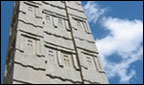
The 100 tonne Axum Obelisk, which marked the beginning of Ethiopian civilisation nearly 2,000 years ago, was hauled off in several huge pieces and shipped to Rome in 1937.
Mussolini was immensely proud of his trophy and saw it as a magnificent symbol of the new Roman Empire. But the people of Axum were devastated by its loss and ever since then, Ethiopians everywhere have prayed for its return.
Finally, after decades of broken promises by a string of Italian governments, it looks like it’s finally coming home.
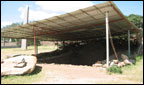
Despite continuing protests from some mainly right-wing politicians in Italy, Silvio Berlusconi’s government has carefully dismantled the Obelisk and sent it in pieces to Rome military airport.
It’s now wrapped and waiting for a plane big enough to cope with its enormous weight. When that is found it will winging its way back to Axum.
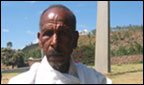
The news brings fresh tears to the eyes of Abbebe Alemayohu, who was six years old when he watched it being pulled down and carted off by Italians troops.
“We were very sad,” he told me. “We were crying as we looked at what the soldiers were doing. As an old man now I am waiting to see it being brought back again. It makes me very happy. The people of Axum are waiting to celebrate this moment.”
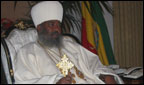
Massive parties are planned and the date it comes back will be made into an annual national holiday. In the eyes of the Patriarch of Ethiopia’s Orthodox Church, Abune Paulos, the return of this treasured tower of rock will bring joy far beyond Ethiopia’s borders.
“Everybody, the whole world will celebrate. All civilised people, all history loving, freedom loving people, all kinds of people will celebrate with us.”
One of the reasons given by successive Italian governments for not returning the Obelisk earlier is that it would not be looked after properly in Ethiopia. This, despite the fact that the Obelisk has been badly damaged by pollution in Rome and was even hit by lightening there a few years ago.
Critics also point out that both of the two remaining obelisks in Axum are in remarkably good condition and have not had to endure the sort of air pollution found in the Italian capital.
Arguments over the Obelisk have soured relations between Rome and Addis Ababa since the end of World War II.
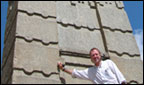
In recent years Ethiopia’s Foreign Minister, Seyoum Mesfin, has led his government’s efforts to persuade Italy to give the monument back. After all, he insists, the Axum Obelisk is no mere antique bauble.
“The significance of the return of the Obelisk to Ethiopia is of paramount importance,” he insists. “It’s our identity, it is part of us. It is part of our own history. It’s a very emotional matter here.”
Now, it seems, attention in Ethiopia will shift from Italy to Britain.
In 1868 British troops looted Emperor Tewodros’s mountain fortress of Maqdala, seizing hordes of valuable church property. Their haul included golden crowns and chalices, tabots, altar slabs, beautiful processional crosses and dozens of fine manuscripts.
These are still kept at a variety of locations in the UK, from the Victoria and AlbertMuseum to WindsorCastle. Professor Richard Pankhurst, son of the famous suffragette Sylvia, has become an ardent campaigner for all these items to be returned.
Speaking at his home in Addis Ababa, the co-founder of the ‘Return Our Obelisk Committee’ says it’s time Britain took a leaf out of Italy’s book and prepared to send back the treasures it stole in the name of the empire so long ago.
“This collection of loot from Maqdala was, I would argue, entirely unjustified and without justification in international law. This was an act of sacrilege. These items should be returned.”
 Back to Reports Homepage Back to Reports Homepage
| | | | |
| | |