| | | | | | | | | |

| | | THE MATERIAL WORLD
|  | |  | MISSED A PROGRAMME?
Go to the Listen Again page | | | | | | | PROGRAMME INFO | | | |
| | | Quentin Cooper reports on developments across the sciences. Each week scientists describe their work, conveying the excitement they feel for their research projects.
| | | | | | Contact Material World | | | | | LISTEN AGAIN 30 min 30 min | | | |
|
|
|  | PRESENTER | | | |
|  | | | |
| | | | | | PROGRAMME DETAILS | | | |
| 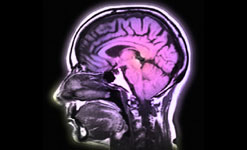 | | | Scan of a human brain |
Neuroethics
Over the past decade, advances in neuroscience have started to open up the mysterious world inside our brains.
Researchers are closing in on the molecules that control our memory, emotion, confidence and mental health.
In the future, a host of 'cognitive enhancers', from designer drugs to electrode implants, could make profound changes to our minds. But how can we make sure they are used ethically?
Sue Nelson talks to Prof Barbara Sahakian, Clinical Neuropsychologist from Addenbrooke's Hospital in Cambridge and Prof Martha Farah from the Centre for Bioethics at the University of Pennsylvania.
Gene patenting
After it was announced in June 2000 that the human genome was almost totally mapped, private and public entities unleashed a flood of patent requests for complete genes and smaller sequences.
But how can you patent a biological molecule? Should biotech companies be allowed to patent genes before they even know their function?
Sue Nelson unravels the fine line between the discovery, invention and ethics in the field of gene patenting with Dr. Sandy Thomas, Director of the Nuffield Centre on Bioethics and Dr. Tim Hubbard, Head of Human Genome Analysis at the Wellcome Trust Sanger Institute.
The BBC will be awarding a young science broadcaster the chance to spend two weeks working with the team that brings you programmes such as MATERIAL WORLD/ LEADING EDGE.
So if you are under 25 and not working as a professional broadcaster, go to the ABSW website to find out how you can be considered for the BBC Radio Science Unit/ Association of British Science Writers Young Broadcaster of the Year Award.
Closing date is 18th March.
| | |
RELATED LINKS
Cambridge University - Barbara Sahakian
University of Pennsylvania - Martha Farah
University of Pennsylvania - Neuroethics
BBC Science - The human brain
BBC News - Brain chips could help paralysed
BBC Health - ADHD and Ritalin
BBC News - Ritalin for sale in North playgrounds
American Medical Association - Gene patenting notes
Nuffield Council on Bioethics
The Sanger Institute - Tim Hubbard
BBC Science and Nature - Genes
The BBC is not responsible for the content of external websites
| |
| | |
|