| | | | | | | | | |

| | | THE MATERIAL WORLD
|  | |  | MISSED A PROGRAMME?
Go to the Listen Again page | | | | | | | PROGRAMME INFO | | | |
| | | Quentin Cooper reports on developments across the sciences. Each week scientists describe their work, conveying the excitement they feel for their research projects.
material.world@bbc.co.uk | | | | | LISTEN AGAIN 30 min 30 min | | | |
|
|
| | YOUR QUESTIONS | | | |
|
|
| | PRESENTER | | | |
|  | | | | "For me science isn't a subject, it's a perspective. There are fascinating scientific aspects to everything from ancient history to the latest gadgets, outer space to interior decorating; and each week on The Material World we try to reflect the excitement, ideas, uncertainties, collisions and collaborations as science continues its never-ending voyage into the unknown".
Quentin Cooper | | | | BIOGRAPHY
INTERVIEW |
| | | | | | PROGRAMME DETAILS | | | |
| 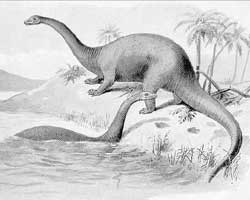 | | | Brontosaurus |
GIGANTISM
In the animal kingdom it seems that size really does matter. But if, as a species, you wish to bulk up or slim down then you have to know the rules. Changing your size or bulk places many limits on your shape, physiology and even behaviour, often in some surprising ways.
So why did gigantism occur? How did the dinosaurs get to be so big? And why has no land creature since undergone such an impressive growth spurt?
To answer these questions Quentin Cooper is joined by Mike Benton, Professor of Vertebrate Palaeontology at the University of Bristol and Dr Donald Henderson, a researcher in Palaeontology at the University of Calgary.
ECONOPHYSICS
Big ideas are nothing new in Physics. Predicting multi-dimensional universes, and studying unseen subatomic particles are all in a day’s work for the jobbing physicist. But for their next challenge they are looking closer to home - they hope to be able to predict human behaviour.
Quentin is joined by science journalist Dr. Philip Ball and economist Paul Ormerod to find out more about the emerging field of social physics. Can the complexities of society really be reduced to a few universal laws? And what can the physicists really tell us by studying the people around them?
Physics has been famously applied to the fluctuating stock markets in an attempt to avoid disasters like the Wall Street crash of 1929 and Black Monday in 1987.
The ‘econophysicists’, as they are known have so far had some success, but still stand a long way from taming the erratic, financial markets and preventing them grinding to a halt again.
But not content with just muscling in on economics, physics is now turning its hand to explaining everything from traffic flow and voting, to marriage and war. | | |
RELATED LINKS
BBCi Science
BBC Radio 4 Science Programmes
How well could Dinosaur's corner?
Why Tyrannosauruscouldn't run
Huge Dinosaurs floated
Timeline of Dinosaur evolution
BBC News – Floating Dinos
Donald Henderson
Mike Benton
Philip Ball
Paul Ormerod
The BBC is not responsible for the content of external websites
| |
| | |
|