| | | | | | | | | |

| | | LEADING EDGE
|  | |  | MISSED A PROGRAMME?
Go to the Listen Again page | | | | | | | PROGRAMME INFO | | | |
| | | Leading Edge brings you the latest news from the world of science. Geoff Watts celebrates discoveries as soon as they're being talked about - on the internet, in coffee rooms and bars; often before they're published in journals. And he gets to grips with not just the science, but with the controversies and conversation that surround it.
| | | | | | Contact Leading Edge | | | | | LISTEN AGAIN 30 min 30 min | | | |
|
|
|  | PRESENTER | | | |
| 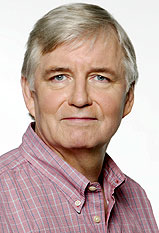 | | | | "If what interests you are new and exciting ideas, it's science you should be turning to. And whether it's the Human Genome Project or the origins of the Universe, Leading Edge is the place to hear about them."
Geoff Watts | | |
| | | | | | PROGRAMME DETAILS | | | |
| 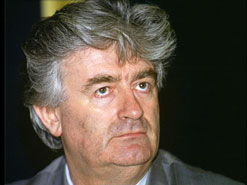 | | | Why did growing a beard allow Radovan Karadzic (pictured in 1992) to escape detection for so long? |
Geoff Watts looks at the top science stories of the week, with Roger Highfield, science editor of the Daily Telegraph.
Endurance-enhancing drugs
Scientists at Salk Institute in San Diego have created what they believe is the world's first endurance-enhancing drug.
Originally created as a treatment for metabolic disease, the compound, when given to running mice, increased their endurance by more than 60 percent.
But on the eve of the Olympics, could this research be abused by unscrupulous athletes seeking to gain an advantage?
Where next for NASA?
NASA celebrated its 50th anniversary this week.
Amid safety fears over the Space Shuttle and budget cuts, David Kestenbaum, science correspondent for US National Public Radio, wonders what the future holds for Agency?
Recognising faces
How was former Bosnian Serb leader Radovan Karadzic able to live incognito for so long - even drinking in a bar where his picture was on display - simply by growing a beard?
Humans pride themselves on their ability to recognise others' faces. But maybe we aren't as good as it as we think, as Geoff finds out from psychologist Mike Burton from Glasgow University.
Darwinian architecture
Tracey Logan meets members of a new generation of architects who are embracing the Darwinian laws of natural selection.
Alcoholic tree shrews
Some tree shrews found in the Malaysian rain forest go out at 8pm in the evening and drink the equivalent of two bottles of wine. Unlike humans, however, the tree shrew doesn't fall over afterwards.
As Dr Frank Wiens of the University of Bayreuth in Germany explains, the tree shrews survive by feeding on the fermented nectar within the flowers of certain palm trees, pollinating them as they drink.
He talks about his research, published in the Proceedings of the National Academy of Science this week. | | |
RELATED LINKS
Salk Institute
NASA's 50th Anniversary Website
Glasgow Face Recognition Group
BBC News: Secret life of fugitive Karadzic
Centre for Evolutionary Computing in Architecture, University of East London
Aedas Architects
Bartlett School of Architecture
BBC News: Tree-shrew is heavyweight boozer
PNAS
BBC Radio 4 Science
BBC Science and Nature
The BBC is not responsible for the content of external websites
| |
| | |
|