| | | | | | | | | |

| |  | HOME PLANET
|  | |  | MISSED A PROGRAMME?
Go to the Listen Again page | | | | | | | PROGRAMME INFO | | | |
| | | Richard Daniel chairs the interactive environmental programme in which he and his guests deal with listener's questions and concerns.
Call 0370 010 0400
[email protected]
Home Planet, PO Box 3096, Brighton BN1 1PL | | | | | LISTEN AGAIN 30 min 30 min | | | |
|
|
| | PRESENTER | | | |
| 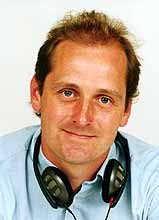 | | | | "Home Planet, the programme that tackles your queries about the world we inhabit and our interaction with it. From astronomy to geology, biology to environmental science. You set the agenda and our panel of scientists and conservationists come up with the answers."
Richard Daniel | | | | |
| | | | | | PROGRAMME DETAILS | | | |
|  | |
Panel
Dr Lynn Dicks
Dr Nick Brown
Professor Philip Stott
TOPICS
Is nature conversation planning for climate change?
A listener living near Braunton Burrows in North Devon asks whether any allowance has been made for climate change in developing management plans for Sites of Special Scientific Interest?
The panel discussed the background to SSSI legislation, how it has been successful in protecting many species and landscapes but how climate change may well demand a broader, pan-regional approach to nature conservation.
Useful websites
Natural England
Scottish Natural Heritage
UNESCO
Joint Nature Conversation Committee (Braunton Burrows)
Devon County Council
DEFRA
Palm Oil
Palm oil if now found in a variety of products from foodstuffs to bio-fuels. The latter is being promoted by the European Commission, but could the desire for an environmental fix result in an environmental calamity in Indonesia and Malaysia where the production of palm oil for fuel is leading to the destruction of species rich rainforest?
Pardue University
United Nations
Round Table on Sustainable Palm Oil
Friends of the Earth
Unilever
Andrew Harding's article for the BBC
Did the Black Death create the so-called mini ice-age?
Dr Thomas van Hoof has been wrongly credited for suggesting that the Black Death of 1347 helped to cause the mini ice age which is sometimes described as starting 150 years later in the early 1500's. The academic from Utrecht University in the Netherlands was actually testing William Ruddiman's ( University of Virginia ) theory that the population loss brought about by 'the plague' resulted in re-forestation, a decline in methane from farm animals and, hence, lower levels of C02.
The panel agreed that the amount of land returned to scrub and forest would have been nowhere near large enough to impact so greatly on C02 and, hence, temperature. Indeed, there is much debate about when the mini ice-age started with some academics noting an increase of ice in the Atlantic as early as the thirteenth century ( some time before the Black Death).
Thomas Van Hoof's site
William Ruddiman's theory
The Black Death (Insecta-inspecta.com)
Boise State University
Little Ice Age (Professor Scott Mandia)
Fate of the saguaro cactus
A listener who travelled extensively in south western states of the USA in the early nineties, reminded the panel of a story who read then which highlighted the decline in population of the huge saguaro cactus. Has it recovered he asks?
The panel noted that the population of saguaro cacti - in which some individuals can live for as long as 200 years - is now much healthier than it was in the early 1990's. The problems then were due to over-grazing and a natural decline in a species that is living on the edge of its natural limits and in such arid conditions. Wet weather and better management of cattle came to its aid.
Desert USA
Saguaro National Park
Friends of Saguaro National Park
Contact Home Planet
Send your comments and questions for future programmes to:
Home Planet
BBC Radio 4
PO Box 3096
Brighton BN1 1PL
Or email the programme: [email protected]
Or telephone the Audience Line 03700 100 400
Home Planet is produced by Nick Patrick and is a Pier Production for Radio 4.
The personal information you provide will be held by the BBC and by Pier Productions Ltd, the independent production company which makes Home Planet. Your information will be used for the purpose of creating the Home Planet programme, and will be processed in accordance with the Data Protection Act 1998. For more details on how the BBC deals with your information, please see the BBC’s Privacy and Cookies Policy at http://www.bbc.co.uk/privacy
| | |
| |
| | |
|