| | | | | | | | | |

| | | FRONTIERS
|  | |  | MISSED A PROGRAMME?
Go to the Listen Again page | | | | | | | PROGRAMME INFO | | | |
| | | Frontiers explores new ideas in science, meeting the researchers who see the world through fresh eyes and challenge existing theories - as well as hearing from their critics. Many such developments create new ethical and moral questions and Frontiers is not afraid to consider these.
| | | | | | Contact Frontiers | | | | | LISTEN AGAIN 30 min 30 min | | | |
|
|
|  | | | | |
| | |
| | | | | | PROGRAMME DETAILS | | | |
| 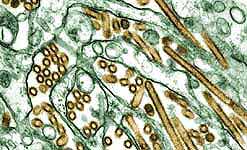 | | The H5N1 strain of the influenza virus, shown in gold
(CDC/C. Goldsmith, J. Katz, and S. Zaki) |
Influenza
In this, the last in the current series of Frontiers, Peter Evans examines the very real threat of a major global catastrophe.
This threat doesn't come from War or terrorism, but a very wiley virus that nearly all of us are familiar with- influenza.
In the Far East, a battle has been waged on the flu virus infecting huge populations of domestic birds.
Making the Jump
What's causing wide scale concern amongst scientists around the globe, is that this virus has already made the jump from birds to humans - killing nearly two-thirds of the people who have been infected.
Could this incredibly clever and resistant virus mutate to be able to jump from human to human?
And if it does, can we do anything about it, and prevent the many millions of deaths that such a pandemic is predicted to cause.
| | |
RELATED LINKS
BBC Science
BBC Health: Flu
BBC News: UN calls bird flu 'world crisis'
The BBC is not responsible for the content of external websites
| |
| | |
|