| | | | | | | | | |

| | | FRONTIERS
|  | |  | MISSED A PROGRAMME?
Go to the Listen Again page | | | | | | | PROGRAMME INFO | | | |
| | | Frontiers explores new ideas in science, meeting the researchers who see the world through fresh eyes and challenge existing theories - as well as hearing from their critics. Many such developments create new ethical and moral questions and Frontiers is not afraid to consider these.
radioscience@bbc.co.uk | | | | | LISTEN AGAIN 30 min 30 min | | | |
|
|
| | | | | |
| | |
| | | | | | PROGRAMME DETAILS | | | |
| 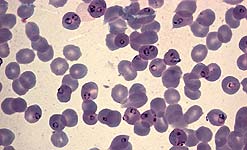 | | Malaria parasite
plasmodium falciparum trophozoites
© Claire Rogers LSHTM
|
Malaria
Malaria is responsible for over a million deaths every year.
Genetic Mutation
About 6,000 years ago humans gained some immunity to the disease through genetic mutations.
During the same era, the mosquito population soared. Mosquitos carry the parasite that causes malaria.
Could the two events be linked?
Yes, says Professor Sarah Tishkoff of the University of Maryland.
Anaemia
The downside of this genetic mutation is that we are more susceptible to anaemia. In particular, sickle cell anaemia and thalassaemia, the subjects of David Weatherall's research.
| | 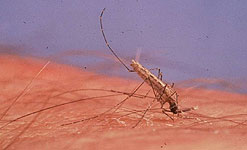 | | Anopheles gambiae (African malaria) mosquito bites Chris Curtis' arm
© LSHTM
|
Vaccine
Professor Adrian Hill has been working to develop a malaria vaccine.
It's a struggle as the malaria parasite's genome is complex.
Larvae eaters
An alternative approach is to kill the parasite-carrying mosquitoes that spread malaria.
Chris Curtis is breeding giant mosquitoes that feed on the larvae of these mosquitoes.
Next week:
Clouds and cosmic rays | | |
RELATED LINKS
Professor Sarah Tishkoff
Professor Karen Day
Professor David Weatherall
Professor Adrian Hill
Malaria Centre at London School of Hygiene and Tropical Medicine
Chris Curtis
BBCi Science
The BBC is not responsible for the content of external websites
| |
| | |
|