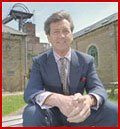
 | Presenter Melvyn Bragg |
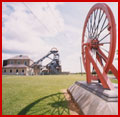 | A former pit |
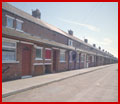 | Ashington's "raws" |
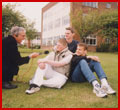 | Producer Simon Elmes with Adam, Mark & Dean |
|
Ashington
It's been called the most beautiful dialect in England. It's the talk of coastal Northumberland that until recently encompassed some of the most heavily mined areas of the country. But now all but one of the collieries has closed. Melvyn Bragg travels to Ashington to listen to old Pitmatic, trace its roots through a thousand years of Northumbrian speech and find out just how the latest generation of young Northumbrians are talking local.
Until the closure of the last pit in 1981 Ashington was one of Britain's most concentrated mining communities. At its peak in the 1930s the town boasted 6,000 men underground. Closely-knit is the cliché used of pit-communities, but it is undeniable that these villages were self sufficient and self-supporting: the village was the pit and measured itself and its people in relation to it. Programme change. Radio 4 visited Ashington in DATE to record Talk of the Town, Talk of the Country. Now, return to assess the impact of social changes on the area's once distinctive local talk - Pitmatic.
You may need to download the free Real Player to hear the clips.
A Pitmatic Primer
Local poet and "Pitmatic" speaker Raymond Reed describes how the dialect was used 
Joan Beal, from the department of English Literature and Language at Newcastle University, explains the connection between the social structure of the pit village and "Pitmatic"
The Northumbrian Burr
An example of the region's distinctive, and now virtually extinct, burr sound
Raymond on the decline of the burr
Origins
The origins of region's dialect according to Joan Beal
Generation Game
Vi Rogers describes the differences between her speech and that of her daughter
Younger and older generations compare the way they speak.
The Next Generation
Local lads Adam, Mark and Dean discuss the differences between their accents and those of their ancestors
|